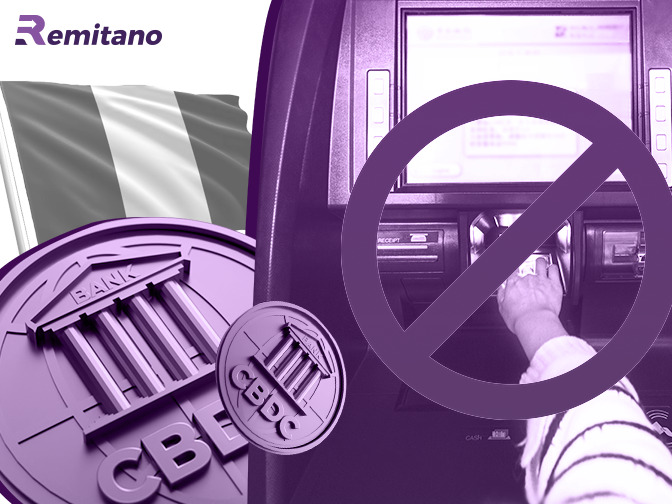
ATM withdrawals of more than $225 per week are not permitted in Nigeria.
On October 25, 2021, Nigeria joined the train of digital currency-adopting countries by pushing for its form of digital currency, central bank digital currency (CBDC). Several developments stemmed from that reality, and studies also revealed how the country's knowledgeable crypto community was working towards becoming better at receiving CBDC.
To further its "cash-less Nigeria" policy and promote the usage of the eNaira and CBDC, the country has dramatically curtailed the amount of cash people and businesses can withdraw.
According to a December 6 memo from the Central Bank of Nigeria, people and businesses are now only permitted to withdraw 45 dollars (about 20,000 Naira) daily and 225 dollars (almost 100,000 Naira) weekly from ATMs.

A 5% fee will be assessed to individuals who withdraw more than 225 dollars (100,000 Naira). In addition, a 10% fee will be set for corporations that withdraw more than 1,125 dollars (500,000 Naira) weekly from banks.
The daily cap on cash withdrawals through point-of-sale terminals is set at 45 dollars (about 20,000 Naira). Haruna Mustafa, Director of Banking Supervision, acknowledged the modifications.
The restrictions are compounded for each withdrawal, so someone who withdraws 45 dollars from an ATM on the same day and then tries to withdraw money from a bank will be charged a 5% service fee.
Buy Crypto Now!
Before the declaration, the daily cash withdrawal caps for individuals and enterprises were 338 dollars (150,000 Naira) and 1,128 dollars (500,000 Naira), respectively.
Since eNaira first launched, adoption levels have been poor. Several reports revealed that less than 0.5% of the population was reported to have used the eNaira a year after its launch. This indicates that the Central Bank of Nigeria has needed help persuading its citizens to use the CBDC.
Nigeria implemented its "cashless" policy in 2012 with the justification that doing so would enhance the productivity of its payment network, lower the cost of banking services, and increase the efficacy of its financial regulation.
Nigeria's central bank governor, Godwin Emefiele, announced on October 26 that the bank would reprint new banknotes to encourage the transition to digital payments because 85% of all Naira in circulation was stored outside of banks.
According to a tracker created by the American think tank Atlantic Council, Nigeria is one of 11 countries that have fully implemented a CBDC. Another 15 nations have started pilot projects, and India is expected to follow soon after.
What are your thoughts on this new monetary policy by the Nigerian government? Kindly share them with us in the comments section.
Maybe you are interested: