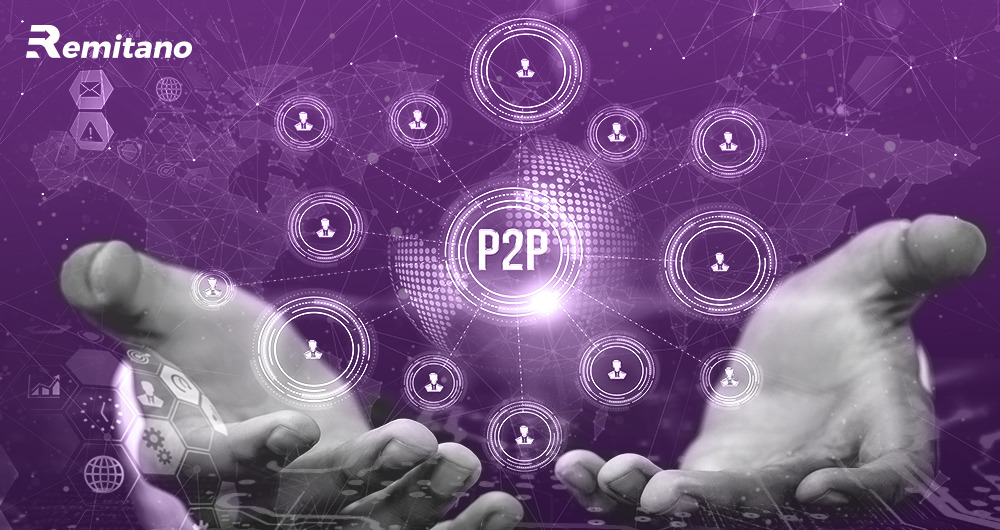
Okay, now let's examine peer-to-peer networking.
What is a Peer to Peer (P2P) Network
A peer-to-peer (P2P) network is a group of computers where each acts as a node or point for sharing files within the group. P2P networking is a type of network architecture that doesn't have a central server.
In P2P networks, computers make files available to other computers on the network, so we can say the computers are providers and users of the files in the P2P network.
When we set up a P2P network on the internet, it can have a central server. If it doesn't, that makes it a distributed network. In a distributed P2P, a network is created where files are split among all the users of the system.
P2P networks used central servers back in days but more recent networks such as BitTorrent got rid of the central server and simply shared files between multiple nodes. They were able to achieve a high volume of file sharing because the load is split across many computers around the world.
Now that we have a basic understanding of P2P networks let's delve deeper into how they work.
How P2P networks work

Primarily, a P2P system is powered by a group of distributed users. There are no central servers because each user has a copy of the files on the network. Each user acts as a server and client to other users on the network. Therefore, every member can download and upload files from/to other members. The ability to share data without downloading from a central server is what makes P2P networks unique.
Computers on P2P networks share files that are on their storage. With the aid of file-sharing software applications, users can search for files on the network and download them. When a user downloads a file, they automatically become a source of the file.
Because every member of a network store, downloads and sends files, peer-to-peer networks are faster and more reliable as the members increase. Also, the distributed nature of P2P networks makes it secure against hack because there is no single point of breach.
We classify peer-to-peer networks into three categories (based on architecture) - Structured, unstructured, and Hybrid.
Structured P2P networks

Structured peer-to-peer networks have a highly organized setup. They allow nodes to query files effectively. This is achievable with the aid of special functions that optimize database queries.
Unstructured P2P networks
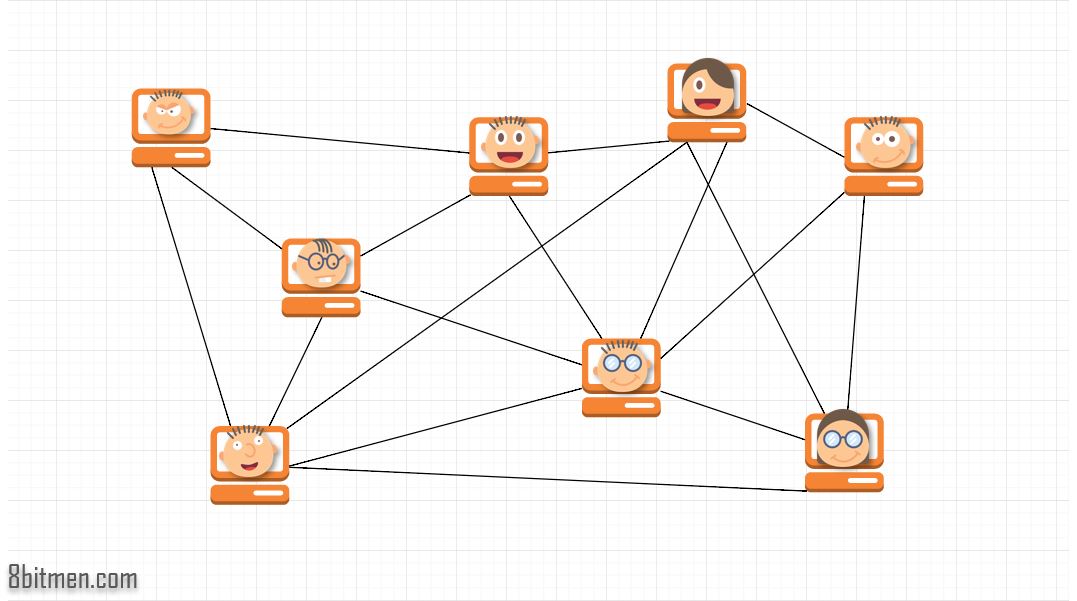
These networks lack organization. It involves a random connection between users. Unstructured systems are suitable for unstable network activities where devices join and leave the network frequently.
While unstructured P2P networks are easier to establish, they require higher CPU usage because queries are sent to all the nodes available on the network. This causes the system to become congested, especially if very few nodes have the queried content.
An unstructured P2P network combines the client-server system with the peer-to-peer network architecture. As an instance, it could feature a central server that allows connection between users.
Famous peer-to-peer networking initiatives (before Bitcoin)
The history of P2P is filled with loads of applications that we could make a long list. Let's briefly examine some notable P2P applications before the creation of bitcoin.
1. Usenet (1979)
Usenet was created based on the Unix-to-Unix copy protocol (UCCP). With it, a machine could connect with another and transfer a file. Terms like "Spam" and "FAQ" originated from Usenet.
2. Napster (1999)
Developed by Shawn Fanning, Napster allowed users to search local disks of other computers for MP3 files and download it to their system. Napster was a blockbuster reaching over one million users in less than one year. However, two years later, it was shut down because of a failed attempt to monetize it and consistent lawsuits.
3. Freenet (2000)
Freenet introduced a remarkable improvement in the aspect of user anonymity. It allowed users to share encrypted snippets of files through central servers without the central server knowing the contents being transferred.
4. Bittorent (2001)
BitTorrent is a peer-to-peer communication protocol for sharing electronic files and data on the internet. Users find an encrypted file (torrent) of interest on a torrent index site or by searching for the file, download it and open it with a BitTorrent Client.
In 2013, BitTorrent was responsible for 3.35% of all worldwide bandwidth, which is more than half of 6% of file-sharing bandwidth.
Significance of Peer-to-Peer Networking in Blockchain Technology
Bitcoin was not designed for file sharing but users can send bitcoins among themselves via a P2P network.
Bitcoin transfer is possible without a middleman simply because of the P2P network. Transactions on the blockchain network are not processed by any banks or central server. Instead, the blockchain serves as an electronic ledger that records all activity on the network.
So, how does Blockchain qualify as a P2P network?
Each node on the network stores a duplicate of the entire blockchain and verifies it with other nodes to confirm the data's accuracy. The network instantly rejects any form of data inaccuracy.
The P2P structure of blockchain networks offers many advantages. An important one is the greater security it offers compared to conventional client-server network setups. Unlike other network systems, blockchains are almost completely resistant to DOS attacks. They are immune to DOS attacks because the network is distributed over a large number of nodes.
Also, blockchain is immutable - that is, data cannot be altered in the network. It is impossible for an attacker to change the data on a blockchain because the majority of the nodes on the network must reach an agreement before data can be altered.
The combination of the P2P network infrastructure and consensus system makes blockchains powerful against hack attacks. Bitcoin was the first currency to achieve the infamous Byzantine Fault Tolerance (BFT) due to its P2P model.
Apart from security, the P2P structure of Blockchain makes it decentralized because it isn't regulated by a central body. Banks, governments, or any other external party have no control over Blockchain.
Since we know that cryptos are primarily peer-to-peer digital currencies, let's discuss peer-to-peer exchanges?
What are P2P exchanges?

Peer-to-peer exchanges allow members to trade their cryptocurrencies directly with each other without involving an intermediary.
Conventional exchanges like Binance and Bittrex act as middlemen between traders and make profits by charging fees per trade. In contrast, traders in peer-to-peer networking are paired together by the system, there's no need for human intermediaries.
P2P exchanges like Remitano simply pair buyers and sellers instead of processing the trades like standard cryptocurrency exchanges. This allows traders to carry out their trade without an intermediary.
External parties could only be used as escrows in fraud or disputes cases. Escrow services are used to combat fraud on P2P exchanges so that traders can be satisfied at the end of every trade.
P2P exchanges are considered to be safer and cheaper than regular exchanges. They are safer because they don't hold bitcoin or cryptocurrencies for their users. Also, they charge users very little fees per transaction.