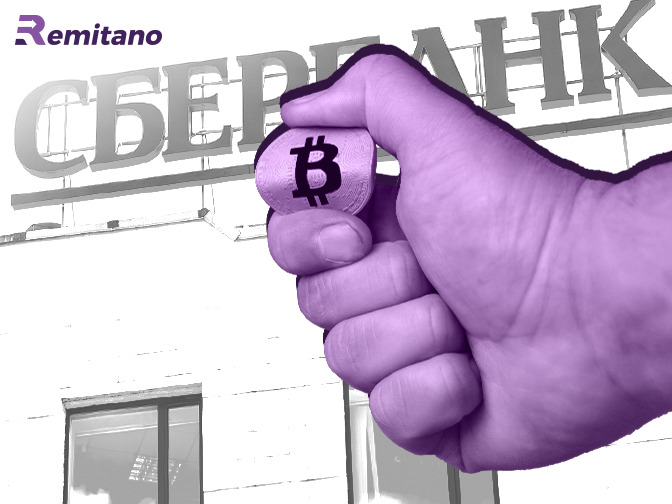
- The Russian Central Bank has suggested a complete ban on cryptocurrency.
- Russian banks are preparing to begin testing the new central bank digital currency (CBDC).
The Bank of Russia releases reports asking for a comprehensive ban on crypto
It would instantly ban Bitcoin mining in the nation, which supplies more than 10% of the computer power to the Bitcoin network, citing environmental concerns. It would also prohibit financial institutions from managing any digital asset transactions. Russians would not only be unable to purchase products and services with Bitcoin, but they would also be unable to purchase Bitcoin.
President Vladamir Putin, who has been in government for 18 of the previous 22 years (he served as prime minister for four years owing to term limitations, which have since been modified), has vacillated on his attitude toward crypto as he weighs the geopolitical repercussions. Many crypto supporters believe Bitcoin and decentralized networks are impervious to prohibitions because they are basically open-source computer systems.
Buy and sell crypto in 5 minutes.
Other governments, though, have already prohibited Bitcoin, either expressly or tacitly.
According to research issued by the Global Legal Research Directorate (GLRD) of the Law Library of Congress, 51 nations across the globe have banned the crypto business.
According to a study published in November 2021 by the Law Library of Congress, nine nations have specifically prohibited cryptocurrency: Algeria, Bangladesh, Egypt, Iraq, Morocco, Nepal, Qatar, Tunisia, and, of course, China.
Except for China and Nepal, all of these nations have sizable Muslim populations. It is debatable whether Bitcoin is permissible under Islamic law, which prohibits the charging of interest or other exploitative financial practices. While a number of famous clerics have deemed Bitcoin to be "halal," or permissible, others, such as the Ulama Council in Indonesia, have labeled it "haram," or banned, due to the currency's lack of physical form.
Even when prohibitions are in place, not every government can fully implement them. According to the Cambridge Centre for Alternative Finance, as of July 2021, the nine nations listed above control 0.19 percent of the Bitcoin mining hash rate, or nearly one-fifth of the network's total computer capacity. According to Cambridge's statistics, none of it originates from mainland China.
Swap coins at a low fee.
The world's most populous nation, China, has its own reasons for forbidding cryptocurrency.
According to detractors, the dictatorship favors financial monitoring in order to keep control over its inhabitants, while decentralized technologies favor privacy and financial independence. China is now testing a central bank digital currency, a virtual counterpart of the yuan, in order to compete with private enterprises Ant Group and Tencent's omnipresent financial services.
The Digital Ruble Pilot has begun, with 12 banks taking part
Banks in Russia are prepared to enter the digital ruble project's trial phase, and some are already testing transactions using the currency. Customer-to-customer (C2C) payments have been tested, and the Bank of Russia intends to extend the sorts of operations in the future.
The Central Bank of Russia (CBR) finished the prototype of the digital ruble platform in December and is already testing transactions. A dozen banks have been asked to participate in the project's pilot phase. The monetary authority intends to progressively broaden the spectrum of participants to include more financial service providers and transaction kinds.
Tass said that after contacting the institutions, the majority of Russian banks are preparing to begin testing the new central bank digital currency (CBDC).
One of them, Promsvyazbank (PSB), is presently processing C2C payments, according to Maxim Khrustalev, counselor to the bank's vice-chairman.
Following the completion of customer-to-customer transactions, "technical testing of C2B, B2C, and B2B payments will commence." Based on the outcomes of the pilot, the Bank of Russia will begin commercializing the digital ruble platform," Khrustalev noted.
"Tinkoff is prepared to pilot the digital ruble in the near future," the online neobank said in a statement. Tinkoff recently joined the cryptocurrency industry by purchasing a majority position in Aximetria, a Swiss-registered fintech business.
VTB, another large Russian bank, has said that its infrastructure is ready to test the digital ruble. "Piloting involves integration with the digital ruble platform and the launch of services such as creating a wallet via a mobile application and digital ruble transactions between persons," according to the bank's press office.
The digital ruble, according to Vitaly Kopysov, chief innovation officer at SKB-Bank, will be a driving force in the creation of new national payment systems for both consumers and businesses. When he spoke with Tass, he elaborated:
The digital ruble will provide extra impetus to the development of offline cashless payment systems for companies in the lack of Internet connection at the point of sale, which is critical given the Russian Federation's geography.
Start crypto investing
Russia's central bank has taken a tough stance on cryptocurrencies, recently proposing a broad ban on crypto-related operations. It started thinking about a digital ruble three years ago and decided to look into alternatives for issuing the CBDC in 2020 when it launched a consultation paper on the subject. The bank produced a digital ruble concept defining its primary architecture in April 2021.
Ak Bars, Alfa-Bank, Dom. rf Bank, Gazprombank, Rosbank, Sberbank, Bank Soyuz, and Transcapitalbank are among the other banks participating in the pilot's initial stage. The Federal Treasury, together with financial intermediaries, will participate in the second stage, which will include transactions between private persons and corporate organizations, such as consumer-to-business (C2B), business-to-business (B2B), and business-to-government (B2G).