The system is targeted at making transactions, and other processes flow with ease. In contrast, validators that will now control the transaction process can earn rewards. Or be described by some as passive funds.
These can be earned when the validators carry out allotted roles effectively and smoothly.
This article will share how you can start as an Ethereum Validator. Why Ethereum 2.0 needs validators, and what you need to be one of them.
What is Ethereum 2.0?

Ethereum 2.0 has been lauded by many as a great transition from ETH 1.0. Where the transaction approval process was slower and lacking efficiency.
It might not be considered an exact transition as ETH 1.0 is still required to stake for ETH 2.0. With this upgrade comes the need for Validators and Stakers.
Those with stakes of 32ETH and above can become validators. Earn on the market, and contribute to its speed and efficiency.
Ethereum is upgrading its proof-of-work mining and transaction processing mechanism to proof-of-stake. Thereby decentralizing the network and delegating transaction signing to validators.
It will offer more scalability, speed, reduce electricity used in mining, reduce congestion, and achieve its desire for operating a network for decentralized applications and finance (DeFi).
The switch from POW to POS requires those who stake as a basis for the latter to be validators.
The good thing is, anyone in the cryptomarket can now own stakes and become a validator.
A Validator is a human running the computer process by consensus and ownership of stakes, operating software, and recommended hardware.
Validators will control the speed of transactions by building new blocks. Ensuring the running of this cryptocurrency is void of bottlenecks or challenges.
Running through ETH1 as part of the process also connotes. The two versions of Ethereum will end up perpendicular when everything is set up.
As such, users who have wallets on ETH1 need not worry as the upgrade will be practically imperceptible with their Ethereum intact.
Read the full post on Ethereum 2.0
Steps to Become a Validator for Ethereum

All these details on Ethereum 2.0, Stacking, and Validators are a preamble to the topical inquiry "how to become a validator."
Although the Staking process is similar to mining and will eventually replace mining in the Ethereum community, it will necessitate the deposit of 32ETH, which can either be self staked (invested by one individual) or joint staked, a contribution with crypto exchanges and service providers.
Staking is a more effective way of maintaining the Ethereum network as discovered by its developers.
Stacking is primarily the process of depositing the required amount of Ethereum to kick start the validator software.
The process aids in data storage, crypto security and does the one thing that has been analyzed to make this upgrade faster─ add new blocks to the network's blockchain.
The steps to becoming an Ethereum Validator are not necessarily complicated.
However, they have requirements of their own, and it is advisable to follow most of the recommendations so you do not lose money or rewards along the way. They are listed below:
1. ETH Deposit

To become an Ethereum validator, you will have to possess 32ETH either as an individual or jointly. This amount of ETH is the maximum you need to stake.
2. Hardware

This new system of blockchain is actually hardware intensive contrary to the opinion of many.
Hardware has a pivotal role to play in the success of a person becoming a validator. Below are the recommended hardware and minimum hardware incase the recommended hardware is not available.
Read about how Ethereum mining works.
A 64-bit Linux (OS-X and Windows can be used. The minimum requirement for the operating system is still a 64-bit Linux, Windows, or a MacBook.
The aim is efficiency as you will need to have a system running smoothly and efficiently.
Intel Core i7─4770 or AMD FX-8310 or better.
In a case where the recommended processor is not available, intel core i5─760 or AMD FX-8100 or a better processor can serve in its stead.
8GB RAM; minimally, 4GB RAM. Speed is necessary as that is one of the aims of the new Ethereum system hopes to achieve.
It is expected that more transactions will be taken up per second as opposed to the 30 transactions per the second estimate of ETH 1 mainnet, and for a validator to be on their top game, hardware with a high memory capacity is most suitable to use.
3. Storage

100GB SSD (solid-state drive) or a minimum of 20GB SSD.
The hardware's storage capacity needs to be high, and since SSD stores data using flash memory, it is the best storage device type recommended for Ethereum validation.
4. Internet

Your internet connectivity must not be high-speed but fast enough to be online always and run effectively.
It is based on the internet and requires that a Broadband connection would be recommended.
5. Electricity
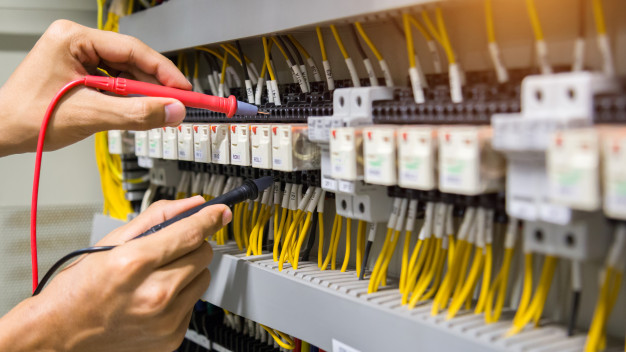
Previously, the mining of Ethereum and even Bitcoin was electricity-intensive.
Things have changed slightly, but the hardware and other related elements still require an uninterrupted power supply.
A UPS (Uninterrupted Power Supply) can guarantee this to a certain level, but other precautionary measures can be put in place to avoid any electrical obstruction.
Electricity is necessary to power the hardware and stay online consistently to avert the risks such as loss or slash of ETH incurred by offline.
6. Knowledge

To become a validator demands a good measure of factual information and in-depth knowledge of the crypto market, Ethereum, the blockchain system, analysis, and other related topics.
Due to Ethereum and the crypto market's versatility, important information helps the validator and informs choices, decisions, and steps to take.
Understanding how to use and send Ether, operate wallets, and perform seamless transactions is necessary.
If you do not have sufficient knowledge on staking but still want to stake anyway, you can utilize an already assembled validator node.
It is also pertinent for potential Ethereum validators to bear in mind that the software used to run the validator accounts needs to be up to date at all times software protection.
The hardware will also require maintenance and appropriate programming.
The research is never-ending, and it is safer to stay the knowledge boat afloat with up to date information.
7. Positive Mindset

Not everyone climbs aboard a new system hoping to get the best out of it, do not let those people be you.
The cryptocurrency market experiences its rise and fall many times, and has its bottlenecks.
Still, a validator has control over his mind, and just like the business requires a winning mindset, to become an Ethereum validator will require one.
Prysm (Prismatic Labs) is currently one of the best platforms for Staking and facilitating the validator process with the intent of setting up the Validator account securely.
They offer guided step-by-step procedures on running the Beacon node, completing the onboarding process efficiently, import validator accounts, running validator accounts, and setting up advanced wallets for the Staking and general guidelines on navigating the other ETH 2.0 validator processes.
They also have a provision for mock Staking, which entails buying for free 32 mocketh and following the procedures to become a validator.
The mock Staking is to experiment with the Validator process without using actual Ether or losing funds in eventualities.
Are You Up to the Task?

Like every business and earning venture, Ethereum validation and Staking has its risks.
However, the risks are minimized only if some ground rules are flaunted, or any negligence occurs.
With such huge risks, which might, in the worst-case scenario, involve the loss or slash of stakes, come the reward of earning and benefitting from the platform.
Conclusively, considering the projected rise of the cryptocurrency to over seven hundred dollars for 1ETH by mid-2021 now would be a great time to have a stake to be part of those who will not only benefit from its bloom but earn more under its decentralized blockchain system.
The Ethereum market is growing fast, and early validators are said to make twice as much as those who stake, later on, making the top earners those who invest their stakes and carry out transactions seamlessly.
So, are you up to the challenge? Here's a good start for you --- study how Ethereum staking works in this post.