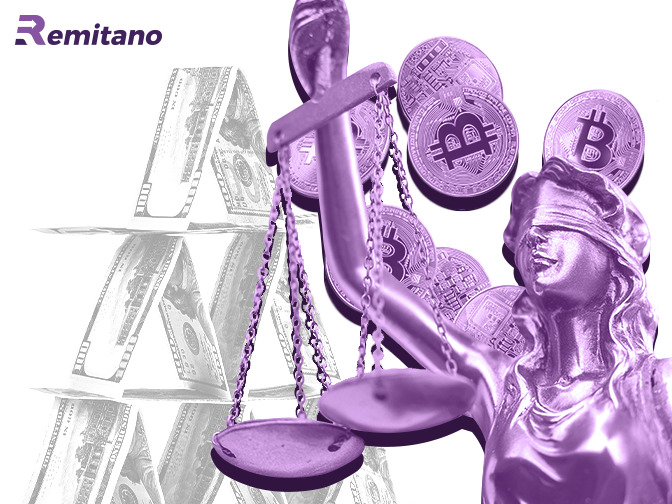
- Following the investors' involvement, a South African court postponed the hearing.
- The declaration is the first time a Chinese higher court has released a decision in a bitcoin matter.
Mirror Trading International instructed to repay over $291M
Mirror Trading International (MTI), the South African bitcoin Ponzi scheme's liquidators, have issued summonses to eighteen people suspected of being the scheme's instigators. According to a report, the liquidators want the listed people to repay more than $291 million (4,666,077,528 rands) to satisfy the scheme's obligations.
Buy and sell crypto in 5 minutes.
The intention to summon the accused MTI masterminds comes only months after liquidators failed in their attempt to have a South African court declare the online bitcoin trading platform an illegal enterprise. According to Bitcoin.com News, a spate of late court filings by lawyers representing MTI investors hindered the effort.
Investors were concerned that the liquidators' move would give them too much power, jeopardizing their prospects of getting their money back. Following the investors' involvement, a South African court postponed the hearing.
Meanwhile, according to a report by Mybroadband, the liquidators have petitioned the Pretoria High Court to hold MTI's masterminds accountable under the Companies Act. The liquidators allegedly said that summoned persons, including MTI co-owners Johann Steynberg and Clynton Marks, were aware that the bitcoin trading platform was insolvent in their response.
Related Post:Tanzania officials request more clarity on CBDC and cryptos
The liquidators allegedly stated in their summons that "[the defendants] were at all relevant times aware of the fact that MTI was trading insolvently as well as of the activities performed and constituted fraud upon MTI's creditors."
Swap coins at a low fee.
Shanghai Court says Chinese law protects Bitcoin
According to Sina, despite China's ban on crypto trading, the Shanghai High People's Court has ruled that bitcoin fits as a virtual asset recognized by Chinese law.
Last week, the court's official Wechat channel issued a notification that stated:
The People's Court has reached a consensus on the legal status of bitcoin and has classified it as a virtual property in practice.
Start crypto investing
The court went on to say that because bitcoin "has a specific economic worth and adheres to the property's qualities, property rights legal norms are applied for protection."
The declaration is the first time a Chinese higher court has released a decision in a bitcoin matter.
Mr. Cheng Mou, who filed a complaint with the Shanghai Baoshan District People's Court on Oct. 10, 2020, seeking that Mr. Shi Moumou restores his one bitcoin, is the subject of the court's announcement.
Following the trial, on Feb. 23, 2021, the court decided that Shi must reimburse Cheng his BTC within ten days of the ruling. On the other hand, Shi refused to pay, causing Cheng to seek an additional remedy through the local judicial system. The Baoshan court called for a mediation between the two sides.
Related Post:Chinese in 3 cities making tax payment with digital Yuan
According to Liu Yang, a lawyer from Beijing's Deheng Law Firm, the high court's declaration would serve as a reference judgment for civil issues concerning bitcoin in the Shanghai area.