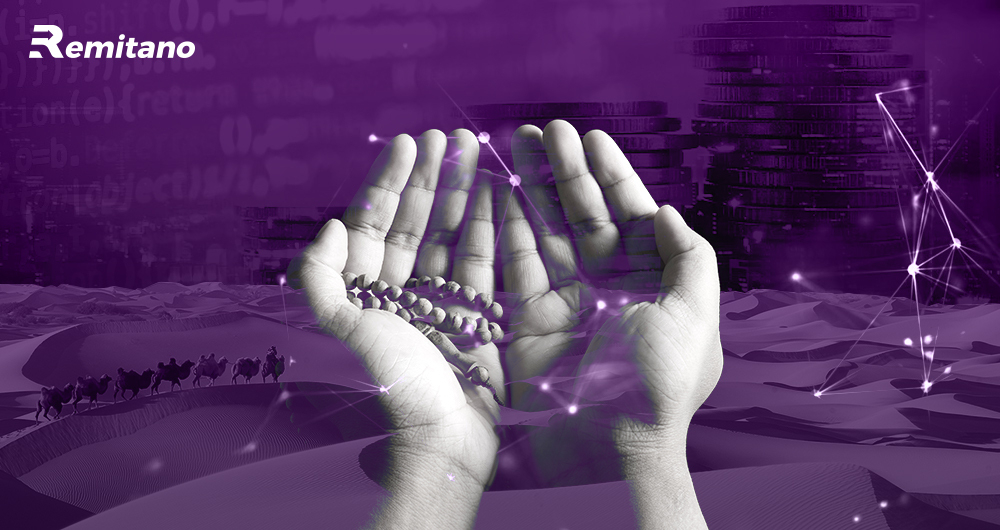
Blockchain is changing the way to do business. More and more businesses have been waking up to the potential of the global Islamic economy in recent years and are looking for ways to cash in on this slice of the market. And for good reason, what with the global halal economy projected to be worth US$3 trillion by 2023 and with Muslims making up a quarter of the world's population.
This article aims to look at how businesses and governments in Muslim-majority economies have integrated blockchain technologies changing the way to overcome current challenges and prepare for the future.
The halal economy?
If you're wondering if blockchain and cryptocurrencies such as Bitcoin (BTC) are considered halal or what halal even means, then do check out our previous article in this series answering just that: Is Bitcoin and Blockchain Halal?
Put simply, if something is said to be halal, then it is permissible in the eyes of Islam. Indeed, those who live in countries with a vast Muslim population would be aware of the significance of the halal philosophy, which stems from and used to mainly revolve around the halal food industry. But the application of this philosophy has grown over the years, as many believe that the philosophy---at its core---is about an ethical and wholesome way of doing business.
This article aims to showcase the many ways blockchain is changing the Islamic economy to complement and even further enhance this business philosophy. We'll start by looking at such applications across sectors in ASEAN or Southeast Asian countries such as Malaysia and Indonesia, followed by our friends in the Middle East.
Ready?
Malaysia: Halal Supply Chains & Crypto Zakat

Source: unsplash.com
There is no denying that Malaysian businesses, citizens and even government agencies have warmed up to blockchain and crypto over the years --- with the Malaysian government going so far as to formerly classify digital currencies and digital tokens as securities back in early 2019.
There are many examples of how blockchain is changing the country, which include:
- An online agrifood marketplace that allows stakeholders in a supply chain to track, trace and verify the authenticity of a manufacturer's halal certificate before making a purchase.
- A halal verification app for the beauty industry which allows consumers and suppliers to verify whether a particular cosmetic product and its components have been certified halal, and if so, in which countries it has received such a certification.
- A crypto zakat platform which allows Malaysians to make their zakat contributions in Bitcoin, before converting it to Malaysian Ringgit and channelling these funds to the relevant beneficiaries. Zakat is a mandatory charitable contribution that Muslims make each year.
Indonesia: Blockchain Sukuk & Halal Certification

Source: unsplash.com
As the most populous country in Southeast Asia with a population of around 273.4 million people, Indonesia's state-owned entities and startups appear to be leading the way when it comes to blockchain adoption, which includes:
- A halal certification system adopted by the country's new halal certification agency and its state-owned products testing and audit company which aims to double Indonesia's halal business revenue by enhancing its halal product auditing capabilities.
- The issuance of halal bonds or sukuk on a public Ethereum (ETH) blockchain by a microfinance lender to raise financing for entrepreneurs. The lender raised US$50,476 during its first issuance back in August 2019 and hoped to raise an additional US$255,419 during its second issuance.
United Arab Emirates (UAE): Blockchain Changing Cities & Takaful

Source: unsplash.com
The UAE is going all out to adopt blockchain as part of its digital transformation efforts, as it aims to make its most populous city Dubai the world's first blockchain city. The country has developed several blockchain use cases in recent years, which include:
- A national organ donation allocation and transplant system which allows those keen on donating their organs to record their will on a blockchain-based application, which then sorts out these applications in a transparent and efficient manner.
- Enhancing Emirates Airlines' Skywards loyalty program by reducing the time and cost involved to onboard loyalty partners for the programme, while allowing both parties to better share data to improve the customer experience.
- An InsurTech platform built on the Hyperledger Fabric blockchain framework which allows insurance companies to settle outstanding claims and payments among each other, thus reducing claim response times from days to minutes.
Saudi Arabia: Digital Currencies & Oil and Gas Trading

Source: unsplash.com
Saudi Arabia is clearly bullish not only on blockchain technologies but also on digital currencies. This can be seen through projects such as:
- Aber, a cross-border common digital currency established by the Saudi Arabian Monetary Authority (SAMA) and United Arab Emirates Central Bank (UAECB) used for financial settlements between the two nations.
- An oil and gas trade processing platform bought into and used by the world's largest oil company Saudi Aramco which focuses on expediting physical energy transactions by eliminating paper-based processes and manual accounting practices.
- A digital securities platform built on the blockchain and compliant with Islamic laws to promote the issuance of digital securities in Saudi Arabia.
Other notable blockchain projects in the Middle East

Source: unsplash.com
The possibilities for the application of blockchain technologies in the Islamic economy are endless and so are examples of such projects. Here are a few notable projects in other countries in the Middle East:
- Turkey: Turkish city Konya is developing its own "City Coin" and blockchain system for public services, beginning with a project that builds on blockchain technology for funding social programs.
- Pakistan: Pakistan's Faysal Bank became the first bank in the country to employ Ripple's xCurrent blockchain for cross-border payments. Ripple is known for both its blockchain technology and its native token XRP.
- Egypt: The National Bank of Egypt is also partnering with blockchain payments firm Ripple to establish new channels for inward remittances, marking the country's first foray into blockchain.
- Oman: Oman's Port of Salalah recently joined a blockchain-based digital shipping platform that will enable companies involved in its shipping supply chain to share real-time cargo data, thus improving transparency and efficiency.
- Qatar: Qatari telecommunications company Ooredoo's blockchain-enabled platform that enables merchants in any industry to safely and efficiently adopt blockchain changing the way solutions are made, such as a smart contracts system for property developers or visual payment tokens for event organisers.