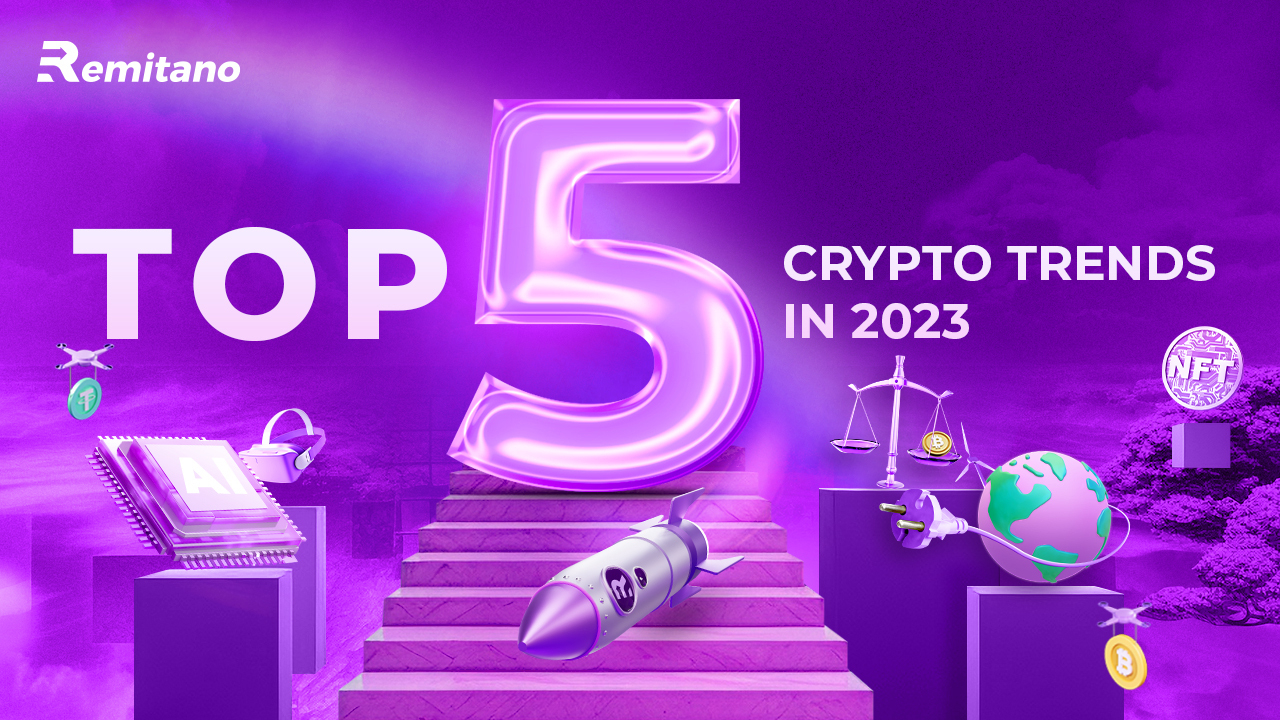
In the constantly changing realm of cryptocurrencies, maintaining a competitive edge is essential and knowledge, they say, is power. As we near the conclusion of 2023 and set our sights on 2024, we are excited to look back at some trends that shaped the crypto industry this year.
This year has been a wild ride in the cryptocurrency space, but we cannot deny that it has also seen its fair share of wins. As we explore some of these trends, we look forward to entering the new year with an improved sense of gratitude for the past and renewed hope for the future.
1. Blockchain and Artificial Intelligence (AI) convergence
The cryptocurrency market has witnessed substantial growth throughout the years, and in 2023, the rapid progress in artificial intelligence (AI) has unlocked fresh opportunities for investors and traders. We anticipate the evolution of these two technologies in several ways, such as Data Security and Privacy, AI for Blockchain Security, AI-driven smart Contracts and More. The merging of blockchain and AI is an exciting development in the tech world, offering the potential to revolutionise various industries and change how we interact with data and information.

Here are some AI and Blockchain trends this year:
A. AI-powered trading and investment
AI applications in cryptocurrency have gained significant attention and adoption in recent years. AI and machine learning offer numerous advantages for traders and investors in the crypto space. One of the most exciting applications is the use of AI-driven trading bots. AI-powered trading bots can execute trades on behalf of users 24/7, ensuring that they don’t miss opportunities and transactions are made based on predetermined criteria.
AI can engage in algorithmic trading, executing predefined trading rules without human intervention. This approach is highly systematic and removes emotional bias from trading decisions.
B. Secure and transparent transactions
The improved integration of AI and crypto has gone a long way to make financial transactions more secure and transparent. AI can be employed to detect fraudulent transactions by analysing patterns and behaviours. If an AI system identifies any unusual or suspicious activity, it can signal the trade for additional scrutiny or potentially halt it altogether. This action serves to fortify the security of the cryptocurrency network. It can also assist in multi-factor authentication, making it harder for unauthorised users to access wallets or initiate transactions.
At Remitano, in 2023, we also applied AI to detect unusual transactions, unreliable accounts, and anti-money laundering activities.
C. Tokenisation of AI Services
Blockchain facilitates the creation of tokens used for transactions within AI ecosystems. It enables the tokenisation of AI services, making it easier to access and pay for AI capabilities. Tokenisation enables the creation of digital tokens representing specific AI services. Users can acquire these tokens, which grant them access to the associated AI service.
2. The Rise of Non-Fungible Tokens (NFTs)
Non-fungible tokens (NFTs ) represent a revolutionary shift in digital art and collectables. NFTs are unique digital assets that are indivisible and cannot be replicated, making them a secure and transparent way to prove digital content ownership. These tokens have gained significant popularity and value over the last few years, transforming ownership and paving the way for fresh possibilities in the digital domain.
Although art was pivotal in propelling NFTs into the spotlight, their utility extends beyond artistic expression. NFTs have already seen adoption across various industries, including fashion, music, gaming, entertainment and virtual assets like virtual real estate, virtual goods, music royalties, and more.
It has empowered content creators, allowing them to monetise their work without intermediaries directly. Artists, musicians, and other creators can reach a global audience, receive fair compensation, and maintain control over their intellectual property. As more creators and businesses recognise the potential of NFTs to monetise digital assets and engage with their audiences, the NFT ecosystem will experience more expansion.
An example of this is the partnership between Diesel and HAPE NFT. The fashion label Diesel has revealed its collaboration with the blockchain startup HAPE to introduce a collection of non-fungible tokens (NFTs). Additionally, Diesel has unveiled D: VERSE, a platform for NFT-based digital and physical wearables, ushering in a new era of luxury digital fashion in the Metaverse.

3. Increasing regulation of Cryptocurrency and Exchanges
The regulatory focus on digital assets has grown substantially in recent years, and this trajectory will persist. This trend gained prominence as a response to various disruptions in the cryptocurrency sector in the past year. Notably, the U.S. Securities and Exchange Commission (SEC) intensified its efforts to subject the crypto market to comprehensive financial regulations. In the first half of 2023, the SEC has executed 24 enforcement actions related to cryptocurrencies.
Here are some of the factors driving this trend:
Government Oversight: Governments and regulatory bodies worldwide are paying closer attention to cryptocurrencies due to their growing popularity and potential impact on financial markets. In 2023, there were more regulatory initiatives aimed at ensuring compliance with existing economic laws and preventing illicit activities like money laundering and tax evasion.
Consumer Protection: As more individuals invest in cryptocurrencies, there is a growing need to protect consumers from fraud and scams. Regulations can establish standards for exchanges and projects to enhance transparency, security, and investor protection.
AML and KYC Compliance: Anti-Money Laundering (AML) and Know Your Customer (KYC) regulations are being enforced more strictly for cryptocurrency exchanges. In 2023, businesses faced increased pressure to adhere to these regulations and perform due diligence on their users.
Licensing and Registration: Some countries are introducing licensing and registration requirements for cryptocurrency exchanges and related businesses. This process involves screening entities to ensure they meet specific compliance standards.
Global Coordination: Cross-border regulatory coordination is gaining importance. Top financial organisations like the Financial Action Task Force (FATF) are working on international standards for cryptocurrency regulations, which may impact regulatory developments in multiple countries.

2023 marks a significant milestone in the ongoing convergence of blockchain technology and the metaverse, and the fusion of these two digital realms is poised to revolutionise how we interact with virtual environments.
Here are some of the ways this partnership took shape in 2023:
Cryptocurrencies as the Currency of the Metaverse: Cryptocurrencies and tokens have become the primary means of exchange within the metaverse. They are underpinned by blockchain technology, ensuring secure and reliable transactions in the metaverse's burgeoning virtual economies.
Cross-Platform Assets: Blockchain has enabled cross-platform interoperability of assets. Thanks to blockchain technology's open and decentralised nature, virtual items and avatars created in one metaverse can now be used or traded in another. It significantly enhances the versatility of the metaverse, allowing users to carry their digital belongings across different virtual universes.
Digital Ownership Assurance: One of the standout features of this convergence is the ability to establish actual digital ownership. Users can represent their virtual assets, whether it's virtual real estate, in-game items, or digital art, as non-fungible tokens (NFTs) on a blockchain. It ensures provenance, eliminates counterfeiting, and brings a sense of legitimacy to digital ownership.
Smart Contracts in Action: Smart contracts, a hallmark of blockchain, play a pivotal role within the metaverse. These self-executing contracts automate various processes, from leasing virtual properties to managing in-game assets. By doing so, they cut out the need for intermediaries, making transactions smoother and more efficient.
Decentralised Governance: In 2023, the convergence has given rise to decentralised autonomous organisations (DAOs) within the metaverse. These organisations allow for collective decision-making, enabling users to have a say in shaping the rules and governance of virtual spaces. It introduces a new level of democracy and inclusivity to the metaverse.

5. Sustainable and Eco-Friendly Initiatives
Worries regarding the environmental consequences of cryptocurrency mining, particularly in the case of Bitcoin, have led to discussions about more sustainable and eco-friendly blockchain technologies. In 2023, there was a greater emphasis on green mining practices and the development of energy-efficient blockchain networks.
The cryptocurrency sector is actively exploring and adopting energy-efficient consensus mechanisms, notably including Proof of Stake (PoS) and variations of PoS, as alternatives to energy-intensive Proof of Work (PoW) blockchains. These transitions aim to reduce the carbon footprint of cryptocurrency mining. For example, the Ethereum network recently upgraded to PoS, which saw Ethereum’s energy usage drop by 99.9%. It is much lower than Bitcoin and has similar proof-of-work (PoW) chains.
Some cryptocurrency projects and mining operations were increasingly focusing on carbon offsetting initiatives. It involved investing in environmental projects to compensate for the carbon emissions generated during crypto mining.
Projects can become more transparent about their energy usage and carbon emissions, enabling users to make well-informed choices regarding the environmental footprint of a specific cryptocurrency. A notable instance involves the rapid growth of the carbon credit market, drawing the interest of prominent organisations worldwide. It includes major accrediting registries like Verra and Gold Standard and international organisations like the World Economic Forum.
Initiatives like KlimaDAO and Toucan have introduced the tokenisation of carbon credits, sparking significant conversations about the prospective evolution of carbon markets and the potential integration of blockchain technology in shaping their future.
The tokenisation of carbon credits involves converting carbon credits into digital tokens on a blockchain. Carbon credits represent ownership or permission rights for a specific amount of carbon emissions allowed into the environment. When tokenised, information about these carbon credits is recorded on a blockchain, ensuring transparency and easy tracking. This process aids in trading, recording, and managing activities related to carbon emissions more efficiently and transparently.

Conclusion
2023 was a unique year in the crypto space, with many exciting and uncertain moments. However, one undeniable fact is that cryptocurrencies are here to stay as more people become aware of their relevance,
The coming year, 2024, is poised to witness significant advancements in blockchain technology, focusing on improving scalability and transaction speeds. This improvement will instil renewed confidence among investors, facilitating a resurgence in the market and propelling it to unprecedented heights. Additionally, the rise of innovative technologies like Decentralized Finance (DeFi) may play a pivotal role in revitalising Bitcoin, heightening its appeal to investors and traders.
As we collectively prepare for the new year, let’s reminisce about the current one and relish in its memory as we approach the end. Join our 2023 LookBack and Win lots of exciting prizes.
References