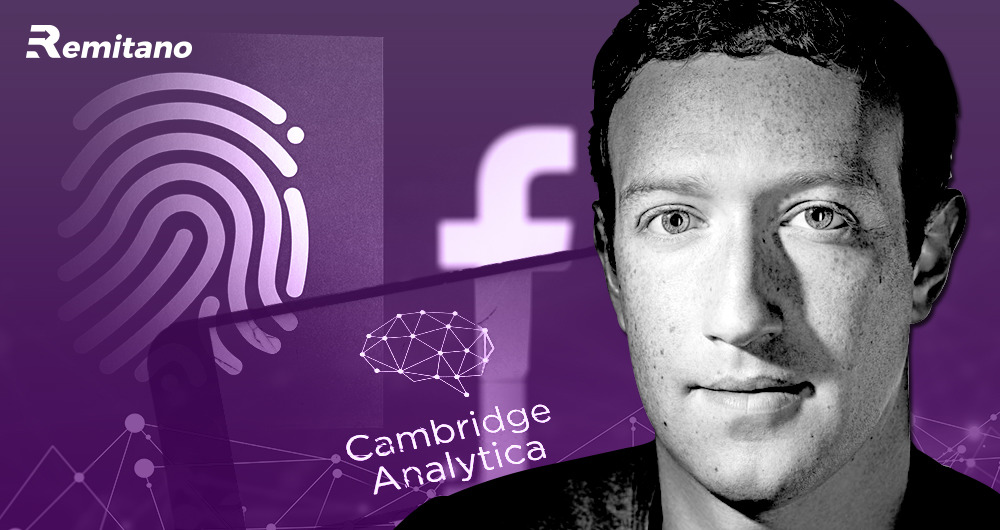
The issue of data privacy protection, or the lack thereof, has always been one of Facebook's most pressing concerns. There have been several incidents regarding the violation of user data privacy, one of which was the Cambridge Analytica Scandal.
February 2014 saw the beginning of the Cambridge Analytica Scandal. Aleksandr Kogan, an American data scientist and a research associate for the University of Cambridge designed an app called 'thisisyourdigitallife'. Amazon's Mechanical Turk users installed this app on their Facebook accounts to complete a survey in exchange for some money. This was, however, a breach in terms of service of Mechanical Turk.

In December 2015, the Facebook platform banned using the 'thisisyourdigitallife' app as Aleksandr Kogan collected users' data from it and shared it with a company called Cambridge Analytica. Unfortunately, before the ban of this app, Cambridge Analytica was able to collect over 80 million Facebook users' personal data.
With the Cambridge Analytica Scandal as a perfect instance, all evidence points to centralization issues. Facebook continuously runs the risk of more data privacy protection scandals. Thus, decentralization through blockchain technology seems the obvious solution and might be the future of data security and privacy protection. Blockchain is the perfect embodiment of trust and transparency.
Everyone uploads their private information, such as home address, bank information, and passwords, without thinking twice about their security. Therefore, making them vulnerable to violations by both hackers and platforms that violate privacy agreements to collect and sell users' data to interested third parties.
Truth be told, the method used to collect user data during the Cambridge Analytica scandal illegally has been used for several years but mostly with permission. Big tech companies now can't thrive without collating and selling off user data to third parties.
As disappointed and furious as Facebook users could be about the lack of data privacy on Facebook, they would be not willing or, as a matter of fact, not able to avoid the use of Facebook.
So, this begs the question; what can blockchain do to protect user data privacy?
1. Enforce and protect user data privacy policies
With the implementation of blockchain technology, a secure decentralized ledger would be used to store private data. In this case, the user may own their own data ownership, and sharing the user's data is at their own discretion. Mischievous third parties will only be able to gain access to or collate personal data with the agreement of the data owner.
The decentralization of blockchain technology also helps eliminate the usual coordination of the authorities required to facilitate any transaction and the regular maintenance updates.
The open-source approach of the decentralized ledger makes it easy for users to examine the code the system runs on, thus ensuring transparency. Any dissatisfied user can duplicate the system and create a platform that works for him.
2. Proper and effective confirmation of the accuracy of user data
Blockchain technology is known to be safe, private, and trustworthy since it was developed as open-source code. As data exchange becomes more complex, blockchain technology will eventually become an effective and trustworthy way to facilitate seamless data transmission and the involved potential payment.
3. Implement data exchange incentives
With the adoption of blockchain an important step to growing, engaging, and governing a society, a decentralized data marketplace lets users get some reward for giving third parties the authorization to access and analyze their data and use it for several purposes but, more importantly, to provide more improved products or services for user consumption.
4. Get rid of restrictions
Recently, the public has depended on social media for many things, including entertainment, communication, and information. Unfortunately, as this dependency increases, privacy protection of user data dwindles. The general public is now susceptible to inadvertent restrictions and privacy invasion.
ProtonMail is an application that uses end-to-end encryption and has a special feature of automatically deleting emails immediately after sending them. However, the Turkish government shut down this app a few months ago because many Journalists and protesters widely used the app's features.
The government also shut down 20 virtual private networks (VPNs), making it almost impossible for its citizens to access some banned or restricted sites. The Turkish government did all these to ensure a firm grip over the internet and total control of the information flowing to and from the country.
Similarly, social media platforms like Facebook, Telegram, etc., still depend on centralized components like internet providers or cloud service providers. Therefore, powerful forces can scrape the platforms for user data or even shut down the platforms.
With the use of smart contracts and blockchain technology, this won't be possible. Blockchain technology would strip all governments of their capability to shut down encryption apps or any app. This is because it is impossible to tamper with or shut down applications built on decentralized systems.

In conclusion, blockchain technology can solve many issues facing industries and niches. However, its implementation should also focus on a system or social media platform. There will be a significant reduction in control given to a single entity where user data privacy is paramount. With this, we can avoid another Cambridge Analytica scandal.