Key Takeaways
- The recent massive Solana (SOL) cyber invasion has implicated an outrageous sum of over 8,000 hot wallets.
- The hack has evacuated an estimated $4.5 million to $8 million in various digital assets, according to the latest reports.
- Security experts identified the root cause as a third-party private key compromise, specifically pointing toward vulnerabilities in mobile hot wallets.
- Protecting your crypto portfolio requires proactive security measures and utilizing audited platforms like Remitano to avoid becoming a victim of similar exploits.
The current ensuing Solana (SOL) cyber invasion has sent shockwaves throughout the crypto community, implicating an outrageous sum of over 8,000 wallets. The hack has evacuated an estimation of $4.5m - $8m, as the latest reports suggest. In a detailed compilation of data made by the popular crypto tracking medium known as MistTrack, four primary addresses connected to the cyber thieves were discovered. These malicious addresses revealed that a staggering amount of crypto tokens had been rapidly drained from unsuspecting users' wallets in a coordinated attack.
Read: A practical guide on how to use Swing in Remitano
What Exactly Led to the Hack?
MistTrack mentioned that aside from the worth of EXIST and other ecosystem altcoins, the hackers have stolen roughly $4.5m worth of USDT, bitcoin (BTC), USDC, ethereum (ETH), and SOL. When the hack initially started, a wave of panic struck as customers began to file reports about their assets getting evacuated without their consent or approval from their mobile hot wallets, which notably included TrustWallet, Slope, and Phantom. A large percentage of the affected customers claimed to not have processed any transactions over a span of 40 days, making the unauthorized transfers even more alarming.
Upon deeper on-chain investigation, it was found that the malicious transactions occurring in the users' wallets were technically being "signed" and approved by the actual owners' credentials. OtterSec, a prominent blockchain auditor, mentioned that this clearly indicated a widespread private key compromise rather than a flaw in the core Solana blockchain itself. Later investigations suggested that certain mobile wallets, particularly Slope, had inadvertently transmitted users' seed phrases in plain text to a centralized server, which was then compromised by the attackers.
Because of this severe vulnerability, all affected users were immediately instructed to abandon their compromised hot wallets and transfer their remaining assets to secure cold storage or a highly regulated centralized platform. There is no doubt that mobile wallet users who relied on constant internet connectivity were the primary victims of this devastating hack.
Experience Remitano Liquidity products and increase passive income now!
In the words of Anatoly Yakovenko, Solana Labs co-creator, there are essentially three modes by which a transfer of assets from a wallet on the account of a user is possible without their direct intervention: token-specific delegation, a leaked seed phrase, or an auto-approve mechanism. Yakovenko clarified that system transfers imply there is no delegation involved, meaning the hackers had complete control over the users' private keys.
Buy and Sell Crypto fast with just one click!
Considering that the cyber thieves got the means to verify and authenticate transactions without users' approval, the leading theory—which was later corroborated—was a supply chain attack or severe data mishandling by a trusted third-party service provider. PeckShield added to the ongoing commentaries about the supply chain theory, stating that "the all-embracing cyber invasion suffered on Solana wallets can be accrued to an ominous exploitation to unveil customers' private keys behind affected wallets."
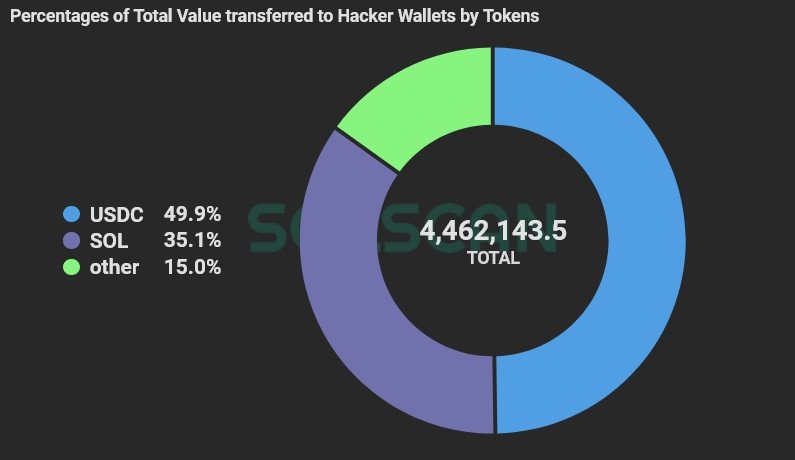
Source: beta-analysis.solscan.io
Although Solana validator Laine repulsed the initial insinuation that validators intended to artificially blacklist the wallets linked with these cyber thieves at the network level, the community had to rely on tracing and freezing funds where possible. Significantly, the current ensuing hack seems to have reached its end as developers patched vulnerabilities and users migrated their funds, leading to a noteworthy drop in the figure of stolen SOL per minute.
This incident serves as a harsh reminder of the risks associated with mismanaged hot wallets. Entrusting your assets to platforms that prioritize infrastructure security, cold storage, and rigorous auditing is essential. For instance, Remitano consistently invests in top-tier cybersecurity frameworks to ensure that user funds and private data are never exposed to such vulnerabilities, protecting the community from the devastating financial impacts of a hack.
There is no reason to panic if you practice proper security hygiene. However, let us know what you think about this attack and what robust security features you believe blockchain ecosystems should incorporate to prevent future tragedies.
🛡️ Essential Reading: Master Your Crypto Security on Remitano
To ensure you are fully protected while navigating the crypto markets and avoiding hot wallet vulnerabilities, explore our complete list of security guides, scam alerts, and platform reviews: