The cryptocurrency market has always been driven by speculation, innovation, and its fair share of unpredictability. Among these elements, the Bitcoin halving stands as a defining moment that could reshape the value landscape for the world’s premier digital currency. As we approach another Bitcoin halving event, many in Nigeria are asking, "How much will a Bitcoin in Naira be afterward?" In this article, we’ll delve into expert insights, historical trends, and provide thoughtful predictions to answer this question.
Understanding Bitcoin Halving and Its Impact
Bitcoin halving is an event that occurs approximately every four years (or more accurately, every 210,000 blocks mined), where the reward for mining new bitcoins is cut in half. When Bitcoin was first introduced in 2009, the reward for mining a block was 50 bitcoins. Following the first halving in 2012, the reward was reduced to 25 bitcoins per block. The second event in 2016 brought it down to 12.5 bitcoins, and the third halving in May 2020 further reduced the reward to 6.25 bitcoins per block.
The halving mechanism is built into Bitcoin's protocol by Satoshi Nakamoto, who created Bitcoin, to control inflation by ensuring that the number of bitcoins generated as rewards does not lead to excessive supply. The maximum supply of bitcoins is capped at 21 million, and halving is the approach used to reach this cap gradually over time without flooding the market.
Impacts on Various Aspects
Of course, the bitcoin halving event has great impacts within the ecosystem of the king of cryptocurrencies. It is vitally important to know the aspects that will see significant changes as a result of the halving.
Below we will describe some of these aspects for you:
1. Miner Incentives
Miners are incentivized to maintain and secure the Bitcoin blockchain by earning block rewards and transaction fees. With each halving, their earnings from block rewards are slashed in half, potentially affecting the security and hash rate of the network if miners find it unprofitable and decide to switch off their machines. However, historically, long-term increases in the price of Bitcoin have often offset the reduced block rewards.
2. Bitcoin Price
The supply shock caused by halving is often anticipated to drive up the price of Bitcoin due to fundamental principles of demand and supply. If the demand for Bitcoin remains constant or increases while the rate at which new bitcoins enter circulation slows, the price per bitcoin may rise.
3. Mining Difficulty Adjustment
Bitcoin's network has a built-in difficulty adjustment mechanism that occurs approximately every two weeks. This adjustment ensures that new blocks are mined at a consistent average rate, irrespective of the total computational power of the network. Even after a halving, when miner's rewards drop, this system adjusts difficulty to maintain a steady block production time if computational power (hash rate) fluctuations occur.
How much is 1 Bitcoin before the launching of the ETF?
4. Market Sentiment
Halvings tend to attract significant attention from both media and investors. Speculation leading up to these events can lead to increased buying activity and heightened price volatility.
5. Long-Term Supply Dynamics
As the block reward continues to halve over the years, the rate at which new bitcoins are created slows down, which theoretically should make bitcoins more scarce and potentially drive up value.
Predicting Bitcoin's Value in Naira Post-Halving
When attempting to predict the future price of Bitcoin in Naira, several factors come into play. These include the level of adoption within Nigeria, global economic conditions, regulatory changes, and developments in blockchain technology. Moreover, market sentiment and investor psychology can have just as much impact on pricing as fundamentals.
By analyzing past halving events, investors can gather clues about future price movements. Previous halvings have precipitated dramatic increases in Bitcoin's price, but past performance does not guarantee future results. Considering this, as well as the unique circumstances surrounding each halving, makes for a balanced approach in estimation.
Given the complex interplay of factors at work, let's explore several key areas that must be considered:
Fundamental Analysis
Fundamental analysis looks at Bitcoin’s core metrics and underlying factors such as:
1. Network Health
This includes factors like hash rate (a measure of the computational power being used to mine and process transactions), wallet addresses growth, and network activity.
2. Supply Dynamics
The halving reduces the rate at which new bitcoins enter circulation, potentially leading to a supply shock if demand remains steady or increases.
3. Technological Developments
Advancements in the Bitcoin protocol or the broader blockchain ecosystem can either enhance security and functionality or introduce new risks.
Will ETF affect the Bitcoin to USD conversion?
Technical Analysis
Technical analysis focuses on historical price data and trading volumes to make predictions about future price movements. While Bitcoin’s price history is relatively short compared to traditional assets, patterns sometimes emerge:
Price Patterns
Chartists will look for recognizable patterns leading up to and following prior halvings.
Moving Averages
These indicators can help smooth out price data and identify long-term trends.
Macro and Microeconomics
Various macroeconomic and microeconomic factors play significant roles:
Global Economic Conditions
Worldwide financial markets and economic health can influence investor appetite for risk and subsequently impact Bitcoin prices.
Nigeria’s Economy
Factors such as inflation rates, GDP growth, remittances, and monetary policy in Nigeria could influence the demand for Bitcoin within the country.

This is How ETF will help improve returns from Naira to Bitcoin investments
Sentiment Analysis
Market sentiment can be a powerful driver. We always hear it said that the market is emotional and this is totally true, after all those who are investing are people, not machines. Take into account the following aspects.
Investor Sentiment
The overall feeling of optimism or pessimism among traders can sway pricing, particularly around significant events like the halving.
How the halving is reported in the media can affect public perception and investor behavior.
External Factors Affecting Bitcoin to Naira Valuation
The valuation of Bitcoin in Naira is influenced not only by events within the cryptocurrency world but also by a myriad of external economic factors. These influences can alter investor perception and confidence, impacting demand for Bitcoin and its price when converted to Naira. Let's dive into some of these external factors that could affect Bitcoin's valuation in terms of Naira:
Nigeria's Economy: Inflation and Currency Depreciation
Nigeria, like many countries, faces inflationary pressures, which can erode the purchasing power of its national currency, the Naira. High inflation rates may increase the attractiveness of Bitcoin as Nigerians seek assets that have the potential to retain value or appreciate over time.
The Naira's Foreign Exchange Rate
The exchange rate of the Naira against other currencies, particularly the US dollar, is also a crucial factor. Depreciation of the Naira makes it more expensive to buy US dollars — this can lead to increased costs for importing goods, contributing to inflation. If Bitcoin is perceived as a more stable asset compared to the Naira, its relative value might increase.
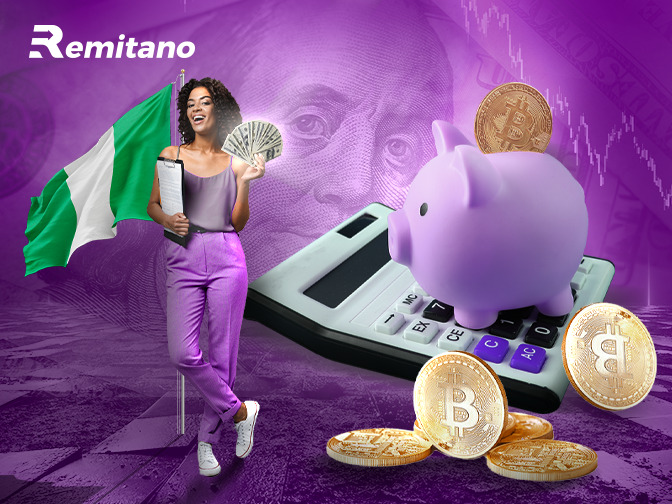
The bitcoin rate to Naria and how the Halving could affect it
Global Economic Events
It is important to be attentive to global economic news and events. With an increasingly connected world, it is not possible to assume that the different narratives that develop do not affect the general scenario, which is why we must be attentive to different factors:
Financial Crises and Bitcoin as a Safe Haven
During times of global economic uncertainty, such as financial crashes or crises, Bitcoin has sometimes been viewed as a digital safe haven, similar to how gold has been perceived during economic downturns. If global instability coincides with the halving event, it could amplify Bitcoin's appeal to Nigerian investors.
Impact of Foreign Capital Flows
Nigeria's economy can be significantly influenced by foreign investment and capital flows. Changes in foreign investor appetite for Nigerian assets can affect the country's financial markets and, by extension, the valuation of Bitcoin in Naira. If foreign investors move out of Naira-denominated assets toward cryptocurrencies, this could impact Bitcoin's Naira valuation.
Regulatory Environment
The regulatory scenario is also a very important element to take into account, although although this element has not come to pass judgment or condemn cryptocurrencies to oblivion, its application tends to generate effects in the market and if you are astute enough , and by reviewing all the background information on this aspect, then you will be able to make better decisions at certain times.
Government Policies
The regulatory stance of the Nigerian government toward cryptocurrencies can influence market behavior. Positive regulations or acceptance of Bitcoin can instill confidence and bolster Bitcoin's valuation, whereas restrictive policies might stifle its growth.
International Regulations
International regulatory developments can also sway the Naira valuation of Bitcoin. For instance, if major economies introduce harsh cryptocurrency regulations, the resulting global sentiment can indirectly affect the Nigerian market.
Advantages of converting 1 bitcoin to USD after the bull run
Technological Advancements and Adoption
Everything that surrounds the crypto world is essentially, in its root and its DNA, a technological event. Although the development of the blockchain has managed to penetrate forcefully into the world of economics with the birth and development of cryptotrading, we cannot help but take into account that in the first instance it is a technological issue and therefore no one should be isolated. to what happens in this area.
Blockchain Innovations
Advancements in blockchain and cryptocurrency technologies can improve the scalability, security, stability, and usability of Bitcoin. As these improvements are implemented, they can encourage broader adoption and increase Bitcoin's valuation in all fiat currencies, including the Naira.
Adoption in Trade and Remittances
The degree of adoption within Nigeria—for example, using Bitcoin for international trade, e-commerce, and remittances—can enhance its utility and, therefore, its valuation against the Naira. If Bitcoin becomes a popular medium for these transactions, especially if it offers advantages over traditional banking channels, its demand and valuation may increase.
It is important to note that predicting the precise impact of each of these factors on the Bitcoin-to-Naira valuation is complex due to the volatility and relative infancy of the cryptocurrency market, and because these factors often interplay in unpredictable ways. Nonetheless, understanding these external influences can offer valuable context for those looking to forecast Bitcoin's future valuation in response to a halving event and beyond.
Take advantage of the bull run by learning how to convert BTC to USD
Trading on Remitano
For Nigerians interested in buying or selling Bitcoin, Remitano offers a user-friendly platform to trade digital assets securely and efficiently. With robust security measures and a straightforward interface, Remitano provides an ideal environment for both seasoned traders and cryptocurrency newcomers alike.
Conclusion: Preparing for the Halving Event
In conclusion, "How much will a Bitcoin in Naira be after the halving?" is a question with many variables. The event's outcome could significantly impact Bitcoin's price, ultimately influenced by market sentiment, adoption rates, technological advancements, and macroeconomic factors.
If you're as excited as we are about the potential of Bitcoin in Nigeria, especially post-halving, we encourage you to share this article on your social media platforms. Knowledge is power, and the more we spread the word, the stronger the Nigerian Bitcoin community will become. Furthermore, if you're ready to join the digital currency revolution, consider trading on Remitano. Explore their secure platform and become part of a vibrant community eagerly awaiting the next halving cycle.
Remember, while investing in Bitcoin can be thrilling, it's important to do so responsibly. Keep yourself informed, understand the risks, and consider diversifying your investment portfolio. Together, let’s watch with anticipation as the next chapter of Bitcoin’s journey unfolds in Nigeria’s bustling financial landscape.
Join us in X and Facebook to stay tuned with all the promos and special events that we will carry for you!