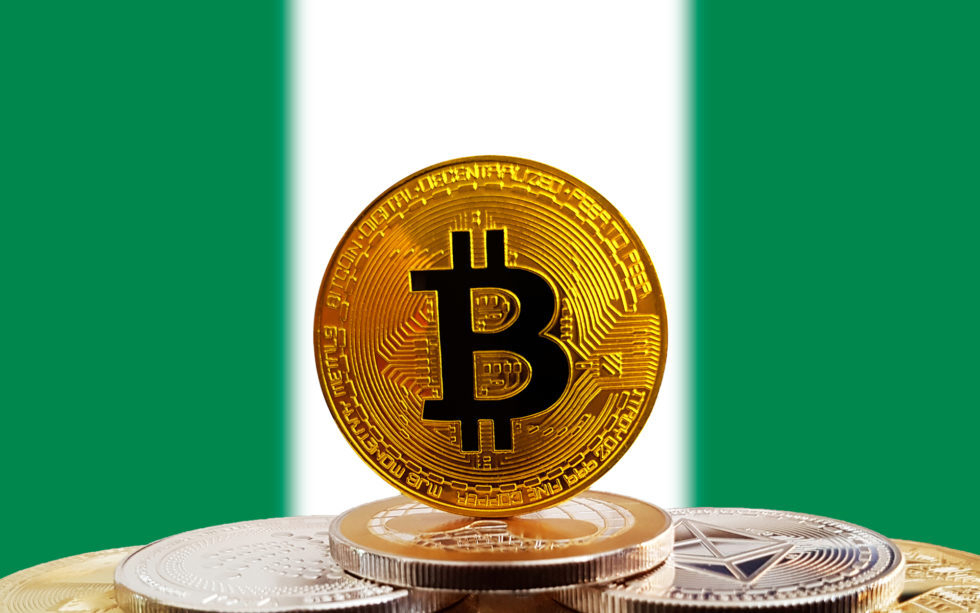
It is no new knowledge that the Nigerian Government has sustained an unfriendly attitude towards crypto. This has seen an attempt by the Nigerian Government to place a ban on cryptocurrencies, while cautioning banks in 2017 against processing transactions relating to cryptocurrencies. However, this did not stop Nigeria from becoming the largest cryptocurrency market in Africa.
Nigeria crypto ban
The response of the Nigeria Government to the growing adoption of cryptocurrency in the country was a sudden release of a directive on the 5th of Jan 2021.
This directive instructed deposit money banks, non-bank financial institutions, and other financial institutions to close the accounts of cryptocurrency exchanges owned in their banks. According to the announcement, stiff penalties will be placed on any institution that fails to comply with this new rule.
The released statement did not provide an answer to the question, why did Nigeria ban crypto trading?, but this information was confirmed by the spokesman of the central bank of Nigeria, Osita Nwanisobi.
The directive was addressed in a letter signed by Bello Hassan, the banking supervision director, and Musa Jimoh, the director of payment system management. The authorities instructed the immediate closure of accounts owned by entities that transact or operate exchanges, referring to the 2017 order release: FPR/DIR/GEN/CIR/06/010 which cautioned all financial institutions about the public dangers of cryptocurrencies.
The ban was immediately met with panic, and social media outrage from citizens with “Nigeria ban crypto” and #freeourcrypto trending. Everyone had their assumption of why this drastic action was taken, following the disabling of fiat Naira deposits by many notable exchanges such as Binance. However, Nigeria's central bank insists that this is just a reference to a previously released statement, and no further comments were made.
What is the status of crypto trading in Nigeria?
To properly get the impact of the Nigeria ban on crypto, we have to understand the barriers to cryptocurrency in Nigeria amidst the prohibition.
Barriers to cryptocurrency in Nigeria
The directive released, as earlier mentioned, places a prohibition on banking or financial institutions on allowing exchanges to have accounts in their institutions. These exchange accounts are mostly used in bank transfers as a form of deposit in these exchanges, affecting the means of making deposits. With most of these exchanges using virtual accounts and Nigerian-controlled gateways, it dramatically reduces the ability of an average Nigerian to make fiat deposits into their wallets.
In straightforward words, the significant barriers to cryptocurrency in Nigeria right now are;
Making deposits through bank transfers.
Lack of a gateway that supports these transactions.
Can Nigerians still trade crypto?
Yes, Nigerian residents can still transact crypto without attracting legal penalties. They only have to do so discreetly. Why so?
As earlier mentioned, the legality of cryptocurrency in Nigeria has always been a debate. However, the government and security forces have always associated cryptocurrencies with fraud (Yahoo Yahoo). This has seen the persecution or even killing of people found to have trading apps on their mobile devices.
The Nigerian Government, in its claimed reasons for its action, associates cryptocurrency as a fraud, criticizing its anonymity and lack of regulation as an opportunity for money laundering and the sponsoring of acts of terrorism in the country.
It is worth mentioning that during the #Endsars protests, the Nigerian Government tried to prevent the progression by instructing banks to close the accounts through which donations were made, and this led to the adoption of Bitcoin for the sponsoring of the protest, which left the hands of the Government tied.
With the increasing adoption of Bitcoin and cryptocurrencies, more people are seen to be moving their funds from traditional banks into cryptocurrencies and other forms of investments, and this can also reflect in the number of funds remitted by Nigerian banks.
With all these said, it is not definite as to why Nigeria bans crypto. However, it is fair to assume the reasons are much more for those stated above.
Therefore with the current policies imposed, the legality of cryptocurrency, which has always been unclear, would escalate the bias against it and comparison to fraud.
What is the solution to Nigeria's ban on cryptocurrency?
As it was earlier stated, the primary barrier is seen in making deposits onto exchanges so that users can buy and sell cryptocurrency. However, this might not affect the crypto market in Nigeria, and this is because the majority of Bitcoin transactions carried out in the country are peer-to-peer transactions.
Therefore, after all the panic and the dust is settled, trading can resume actively. However, there are a few ways that could work when trying to deposit funds into your wallet amidst the whole "Nigeria ban crypto" crisis, and they include;
The use of p2p market exchanges such as Remitano: In such marketplaces, you can make payments directly to the seller's Nigerian bank account from yours without the bank telling the purpose for such a transaction. However, there is a risk attached to it, and this is why p2p exchanges that provide secure transactions should be used.Through Mastercard or Visa cards: The use of MasterCard or Visa cards to make deposits should be possible, primarily via wallets that do not use a Nigerian-based gateway such as Moonpay or simplex.Users who have a foreign account can quickly deposit those funds into their wallets as long as the bank account bears their name.Relatives and friends abroad involved in crypto can help users purchase cryptocurrencies and then transfer them from their wallets to yours.
The fact that "Nigeria ban crypto" doesn't in any way limit the crypto trading in the country but only forces a new approach to trading. As Nigeria is the largest crypto market in Africa, it is fair to say that most exchanges trying to break into this market would work all round the clock to find a way to solve such issues.
How the Remitano P2P Trading helps at this time?
The Remitano fiat wallet is a solution developed by the P2P exchange for performing important functions, such as fiat storage, deposit, withdrawal, buy, and sell. Objectively, a fiat wallet helps you transact crypto alongside local currencies. In the presence of a ban, Nigerians can still deposit Naira from their Nigeria-based bank accounts to the Remitano fiat wallet. All other functions also remain active: these include buying and selling crypto, and fiat withdrawals to their bank accounts.
The greater side of having a Remitano fiat wallet is the Instant Trade Feature that allows you complete trades instantly. Using the wallet has many advantages over exchanges and traditional bank payments as well.
cryptocurrency is a new form of digital asset based on a network that is distributed across a large number of computers. This decentralized structure allows them to exist outside the control of governments and central authorities so it can't be banned by Nigeria Government.