Can it potentially change our future for the better, be a true digital gold, and become the medium for what is set to be the largest generational wealth transfer in history? It could very well be, and you might be persuaded by the end of the article once you understand how Bitcoin really works.
Table of Contents
1.What is Bitcoin and how does Bitcoin really work?
2.How does Bitcoin really work?
3.Who created Bitcoins?
4.What is Bitcoin mining?
5.How do I start trading Bitcoins?
6.What is Bitcoin worth?
7.What makes Bitcoin valuable?
8.How can I get Bitcoin?
9.Where can I get Bitcoin?
10.What can I buy with Bitcoins?
11.How do I exchange Bitcoins for real cash?
12.Do I need a wallet for my Bitcoins?
13.What is the best Bitcoin wallet?
14.What are Bitcoin private keys?
15.Can my Bitcoin account (wallet) get hacked?
16.What happens if my Bitcoins are stolen?
17.Is trading Bitcoins safe?
18.What is lightning network?
19.What are the pros and cons of using Bitcoins?
20.What Bitcoin terms does a beginner need to know?
21.What are the emerging Bitcoin trends of 2020?
1.What is Bitcoin and How Does Bitcoin Really Work?
When you get down to it, Bitcoin (BTC) is simply an asset.
It's able to store value and transfer that value from one Bitcoin address to another. In a way, it's similar to how a bank account (with fiat currency as the stored value) is able to make transactions with another bank account. Or even gold.
Bitcoin is often called digital gold. Though it may not have reached a legitimate status of being a stable store of value, it does have the key characteristics of being one.
Since it can act as both a currency and a store of value, more and more companies and merchants are taking notice of this. And if you have noticed, a lot more crypto exchanges and platforms have also mushroomed to fill in the increasing demand for buying, selling, and trading cryptocurrencies.

That said, if you're new to Bitcoin trading, you should be careful and learn as much as you can before getting started. It may be overwhelming to master the ropes and tricks. But we all need to start somewhere and take that very first step towards selling, buying, storing, and getting even free coins.
2.How does Bitcoin really work?
We have covered what is Bitcoin, so let's now talk about the three key aspects of how Bitcoin works:
2.1 How Does Bitcoin Work on Digital Wallets?
Digital wallets are soft or hardware stores where you keep, buy, sell, track and retrieve Bitcoin. A software wallet is only present online; it can't be touched. A hardware wallet, on the other hand, looks like a USB; it is both portable and touchable alike. Wallets have unique addresses and generate secure passwords for owners to control their trades. Mobile wallets are Bitcoin apps for smartphones, which are not as popular as web wallets; however, a few notable companies are encouraging their commercial use among crypto investors.
For example, <strong>Statista</strong> port suggests that <strong>Apple Pay</strong> is set to become the most used mobile wallet all over the globe with about 227 million customers.
2.2 How Do Bitcoin Transactions (buy or sell) Work?
For any user to be able to transact <strong>buy and sell</strong> he, first of all, needs an exchange (a place to trade) and a wallet (storage) to secure his earnings. According to a <strong>study</strong>, daily BTC purchases are estimated at 300,000 per day. This means about 300,000 users actively trade Bitcoins on a daily basis.
2.3. How Does Bitcoin Work with the Blockchain?
Blockchain, in simple terms, means different secured blocks of data used to keep transaction records from being changed. Without the blockchain, Bitcoin networks will cease to exist. In other words, the blockchain to Bitcoin is what the skeleton is to the human body--- a framework of support. Every Bitcoin account has a wallet address linked to it, which is publicly visible on the blockchain.
A <strong>blockchain wallet</strong> is usually connected to computers and open for viewing. The blockchain is continuously expanding; and on this, A <strong>report</strong> from Cison shows that Blockchain market size will reach USD 57,641.3 million by 2025.

3.Who Created Bitcoins?
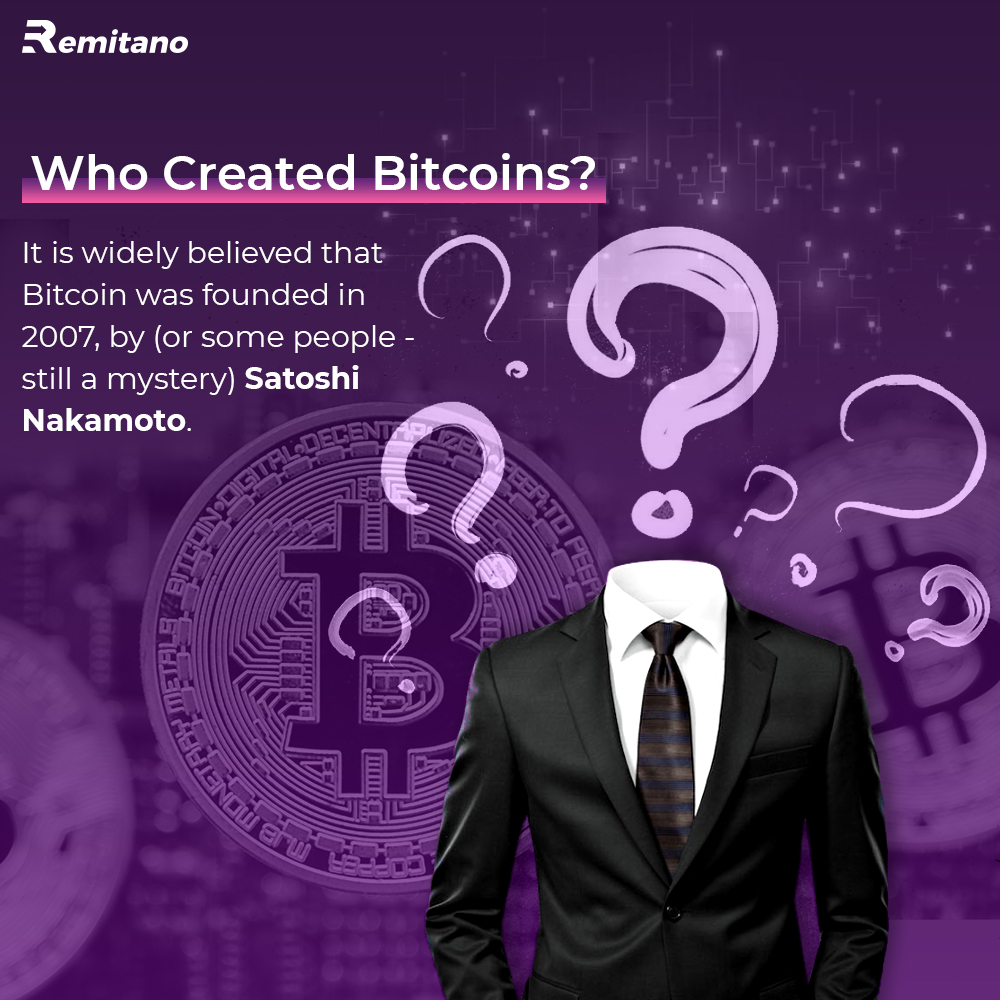
Bitcoin was created by an anonymous individual (or a group of individuals) called Satoshi Nakamoto. <strong>Satoshi Nakamoto</strong>. And until today, the true identity of this person or entity has remained a mystery.
The Bitcoin blockchain went live in August 2008 and shortly after the Bitcoin whitepaper was released.
4.What is Bitcoin Mining?
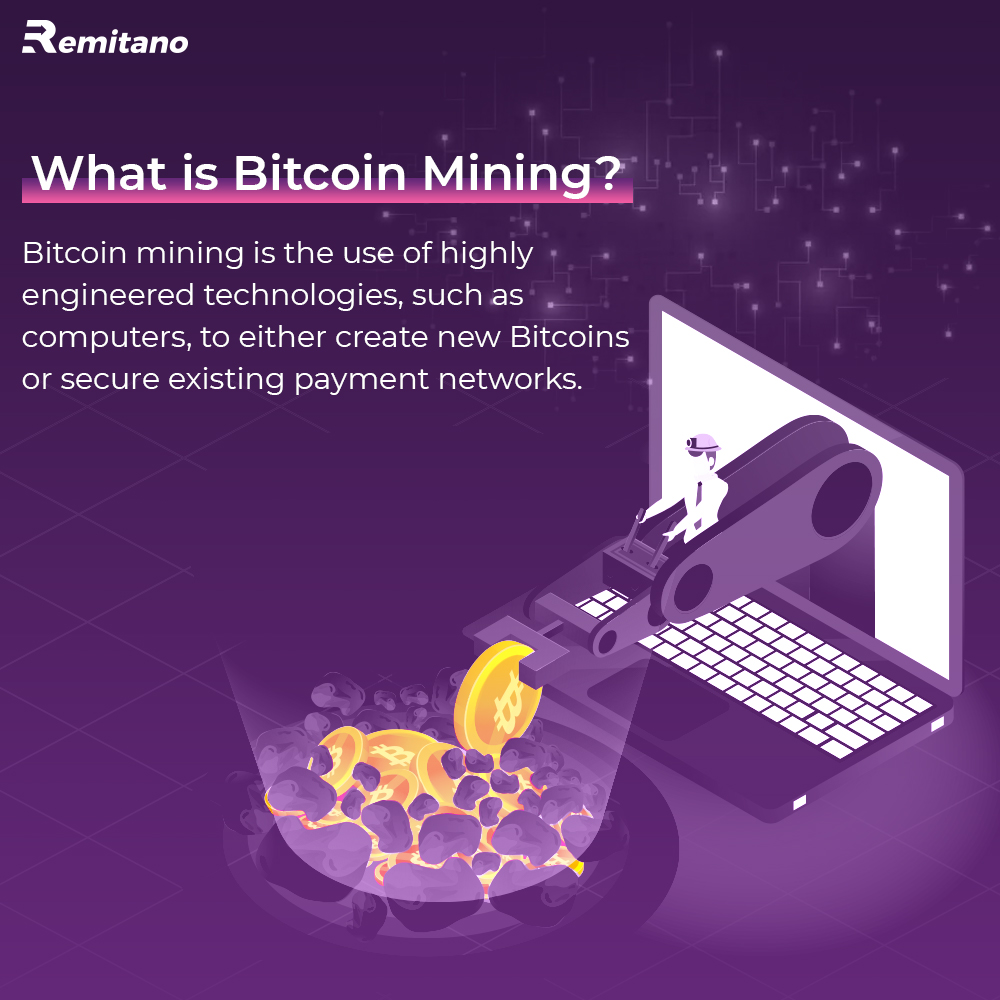
Mining BTC is like gold mining ...There are the miners and the mining pool.
Mining is a process performed universally, and miners have to create quintillions of Bitcoin blocks and add them to the blockchain. .This action renders the buggery of the Bitcoin network impossible. For an assault to take effect, it will be so costly that no matter what the cash incentives are, the gain will be completely insignificant.
Bitcoin mining is one of the ways of replenishing spent coins in the network. Therefore, approximately, 800 Bitcoins are mined every day, and <strong>in 2019, about $5 billion</strong> was made in revenue from mining Bitcoins.
5. How do I start trading Bitcoins?
Bitcoin trading is a full scope. Before you start trading Bitcoins, there are a few details to know about how Bitcoin works in order to avoid common mistakes.
5.1.How Bitcoin Works with Deposits and Withdrawals?
Traders sometimes deposit in the <strong>local currency</strong>. Bitcoin may also exactly function in the same manner as a <strong>fiat exchange</strong>. If you need some advice on tax enforcement under your state law, you can speak to a professional accountant.
5.2 How Bitcoin Processing Works
Transfers and payslips can be created easily --- it's a no brainer. Once done, you may ask help from a dealer to transfer money in your home currency or Bitcoins. Many selling firms use a laptop or cell phone to enable consumers to pay via their smartphones.
5.3.How to Accept Bitcoin
If you approve BTC as a payment currency for products and services, you will be paid in Bitcoins. There are also a variety of options for purchasing Bitcoin, such as trading on crypto exchanges or accepting Bitcoin in return for fiat money. Currently, an increasing range of companies and exchanges are embracing Bitcoin all over the world. This is because using Bitcoin as a form of payment helps them to improve their user experience and to also gain more exposure around the market.
6. What is Bitcoin Worth?
Bitcoin's Value from 2012 to 2017
In 2013, BTC was worth $266, a huge increase from the $13 it was worth the previous year, 2012.
By 2017, Bitcoin was at an all-time high of $19,783. Suddenly, everyone was talking about Bitcoin. It seemed too good to be true. In fact, Bitcoin was called a financial hot cake.
Bitcoin's Value from 2017 to 2018
But then in 2018, the party came to a stop. The Bitcoin prices began a steady decline that continued even till 2019. The Bitcoin fell to about $3900.
As of when writing, the price of bitcoin is stabilizing once again, with the current price index (the average price across foremost stock exchanges around the globe) is at $6,618.

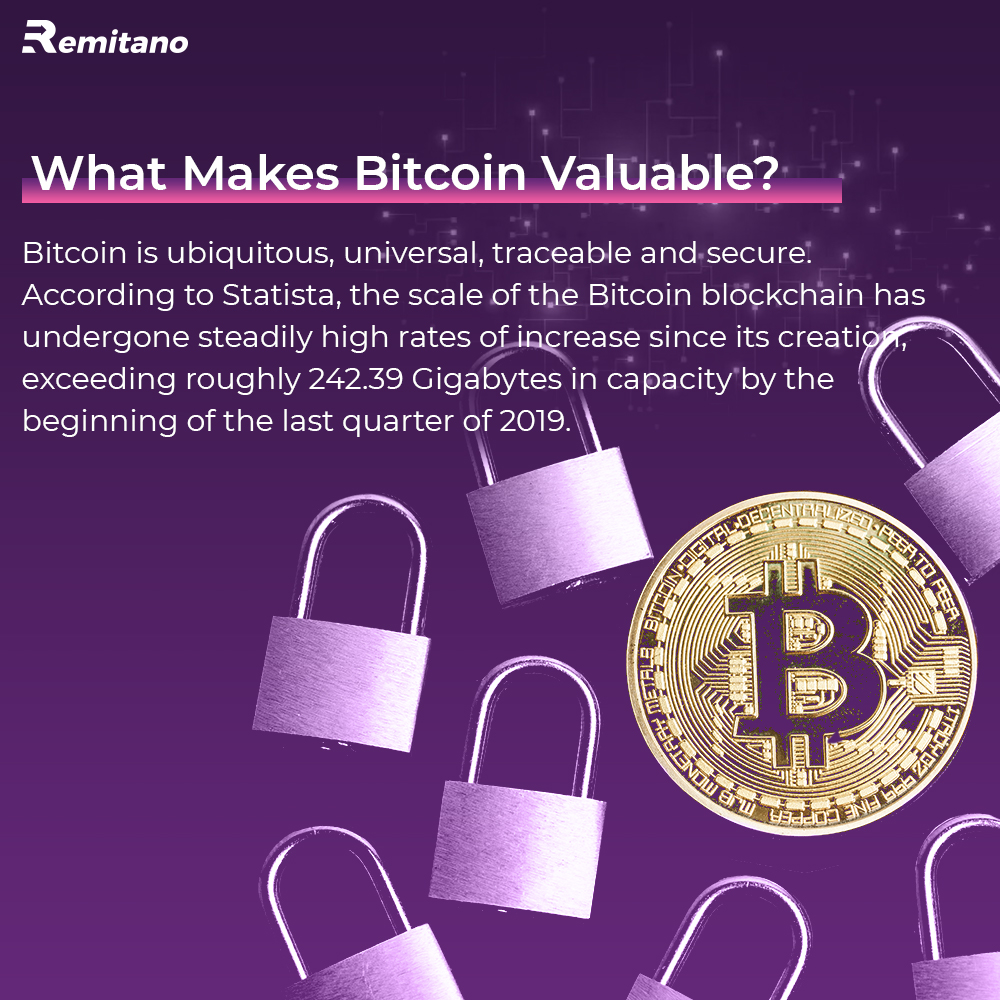
7. What Makes Bitcoin Valuable?
Bitcoin is fast becoming a conventional currency. That's why it is vital to know the distinct properties.
Check these out.
- Worldwide accessibility: Bitcoin transactions span the globe and don't rely on physical location. The system works on <strong>decentralized computing</strong> all over the world. The cool part is that the transfer destination never does matter.
- Anonymity: Have you wondered what else makes trading Bitcoin preferred to banking? First, Bitcoin traders are anonymous. So, yes, it means that your real name or details are never displayed to the public, except you choose to reveal it. Take note that only the identities of the users are anonymous; however, details of Bitcoin transactions are not.
- Trackability: All transactions are public. So, even single transactions can be tracked. The transactions are saved in a blockchain. That way, no one can spend your coin without a general notice. Also, no one can take, copy, or defraud people on your behalf --- not without your knowledge. The blockchain lets the user see who has had access to their funds. All in all, it is possible to trail the history of Bitcoin transactions.
- Decentralization: BTC is decentralized, which means a single entity manages it. There's also no authority over it. This system is unlike banks, where the right to block your account is reserved.
- Security: Bitcoin is very secure. The reason for this is the large network of computers from where BTC is run across the world. The second reason is the crazy amount of computational work that goes into maintaining the <strong>BTC blockchain</strong>. It turns out; at every average interval of 10 minutes, a new blockchain is added to the chain. Every time a new blockchain is added by a miner, the just added block accompanies two things -- a reference to the last added block. Next, a nonce value that causes the hash of the block header to produce a number below the current difficulty. Every two weeks, this threshold adjusts to ensure that the average time between the blocks is kept at 2 minutes.
8. How Can I Get Bitcoin?
8.1. Mining
How does Bitcoin mining work? Mining involves solving intricate puzzles so that the system rewards the miner with Bitcoin.
Bitcoin was first mined by its pioneer, Satoshi Nakamoto, who got 50 Bitcoin from it. If a miner is fast enough to solve some of the puzzles before the other miners, then they are given a predetermined amount of Bitcoin as a reward for quickness and smartness Now when the miner completes the puzzle, he receives a reward of 25 Bitcoin. In 2016, the award was split to 12.5 Bitcoin, and it appears that the bonus will continue to be split until all <strong>21 million Bitcoin</strong>, which is where the system is designed to stop, have been mined. The estimated time for when this will happen is in the year 2140. The estimated time for this is the year 2140.
8.2. Buying
How does a Bitcoin transaction work? Bitcoin transaction means the buying or selling of Bitcoin. When you buy a Bitcoin, the private key of the Bitcoin is given to you. This key is what you'll use in transacting it in the future. Care must be taken to secure the key because if it gets into the wrong hands, your eggs are fried.
Read our <strong>Brief Guide on How to Buy Bitcoin</strong> to get a clearer picture of the entire process.
8.3. Exchange of goods/services
In terms of selling of Bitcoin, our era is blessed to have many businesses or service centres where Bitcoin is accepted nowadays, -- hospitals, supermarkets, etc. If you do have something you can sell, you could put it up in exchange for its monetary value in Bitcoin.
Other ways to get Bitcoins (FOR FREE) Include:
- Bitcoin faucets
- Bitcoin game
- Referral programs
- Gambling

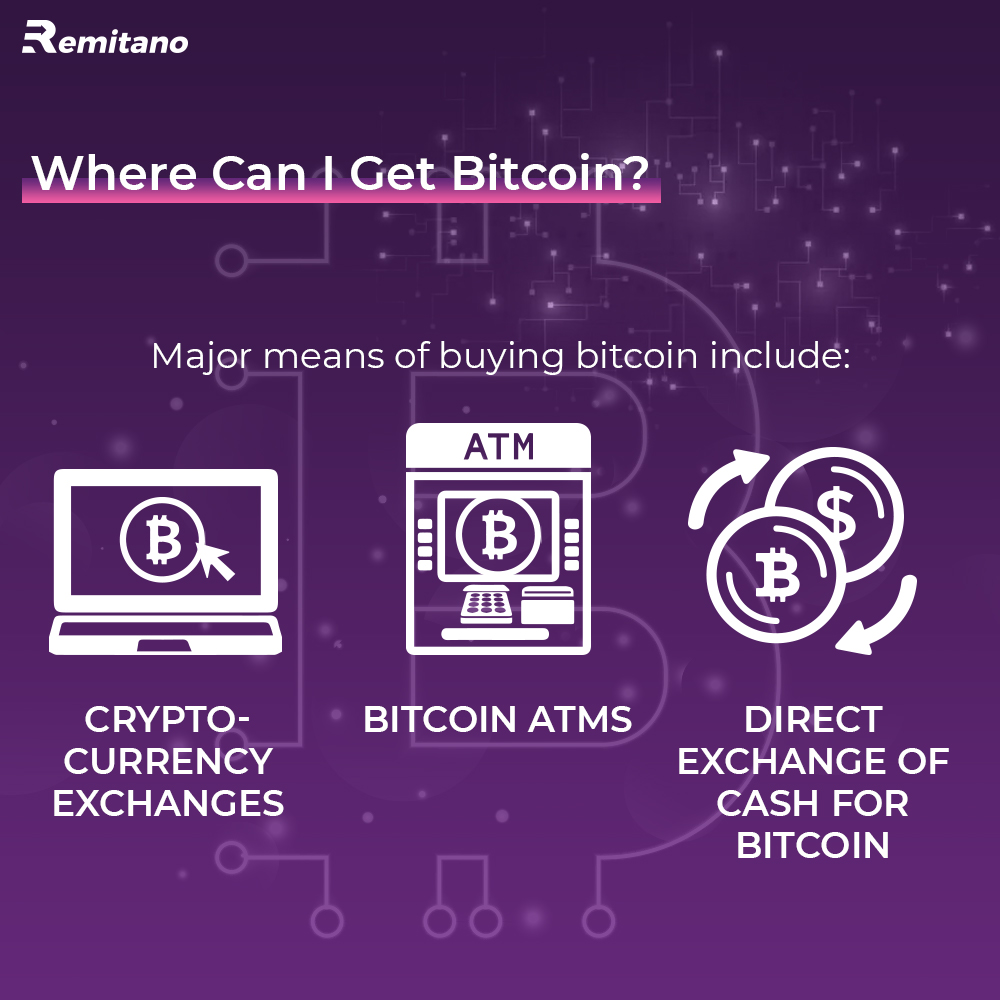
9.Where Can I Get Bitcoin?
9.1 Cryptocurrency Exchanges
Crypto exchanges are platforms where you can buy and sell cryptocurrency. <strong>Remitano</strong>, for example, offers a place for safe cryptocurrency transactions with zero sign up expenses.
9.2 Bitcoin ATMs
How does Bitcoin ATM work? Bitcoin Automated Teller Machines are public storages for Bitcoin where people can exchange our cash for Bitcoin. To do so, you need to have a wallet where Bitcoin purchased from the ATM will be sent.
9.3 Direct Exchange of Cash for Bitcoin
How does Bitcoin ATM work? Bitcoin Automated Teller Machines are public storages for Bitcoin where people can exchange our cash for Bitcoin. To do so, you need to have a wallet where Bitcoin purchased from the ATM will be sent.\
(sites and <strong>apps</strong> would connect you to people that want to sell.
10.What Can I Buy with Bitcoins?
11.How Do I Exchange Bitcoins for Real Cash?
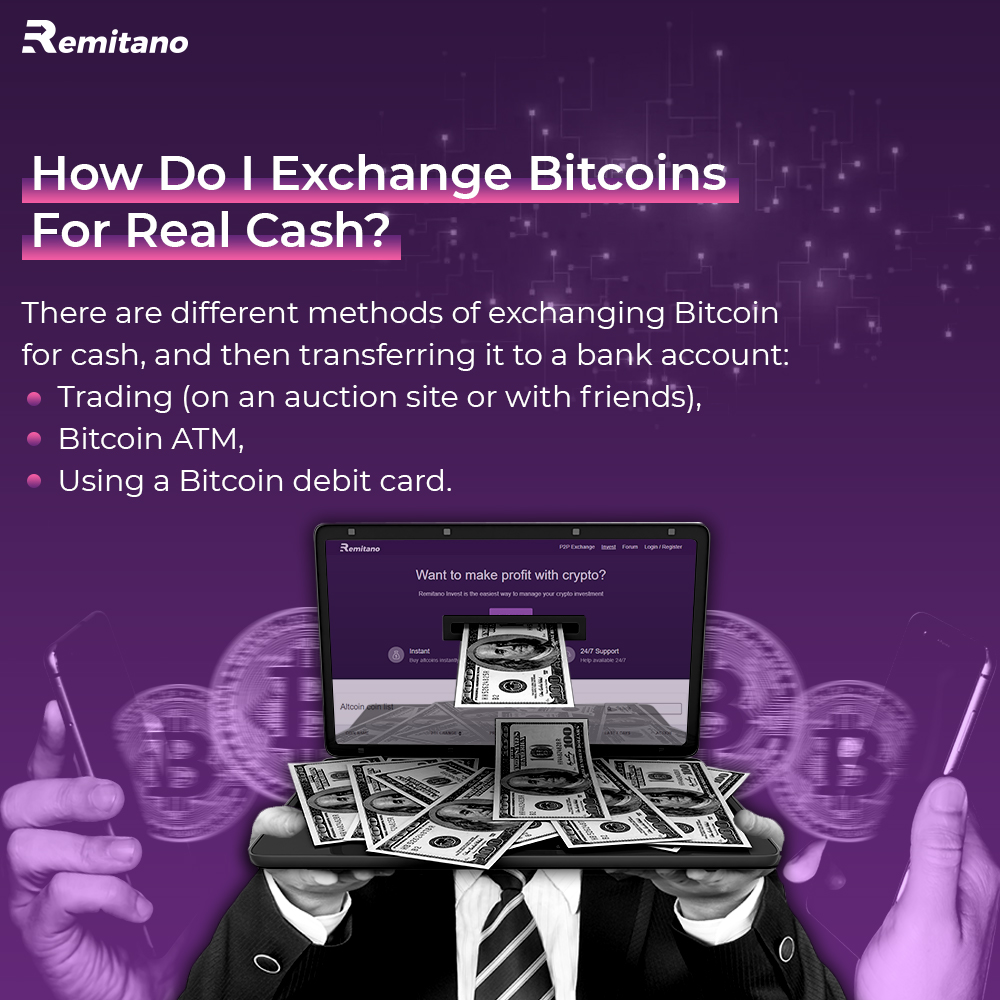
- Sell Bitcoin on a cryptocurrency exchange: Remitano is a reliable and one of the leading exchanges to trade Bitcoin and get the corresponding fiat cash straight to your bank account.
- Use a Bitcoin ATM: According to Statista, the number of <strong>global Bitcoin ATMs is 7004</strong>. If one happens to be located near you, you can use it to exchange Bitcoin for fiat money.
- Get a Bitcoin debit card: A few platforms give the option of selling Bitcoin and receiving a prepaid <strong>debit card</strong> in exchange.
- Sell Bitcoin to friends: If you have buddies who want to buy Bitcoin, you may offer yours to them in return for cash.
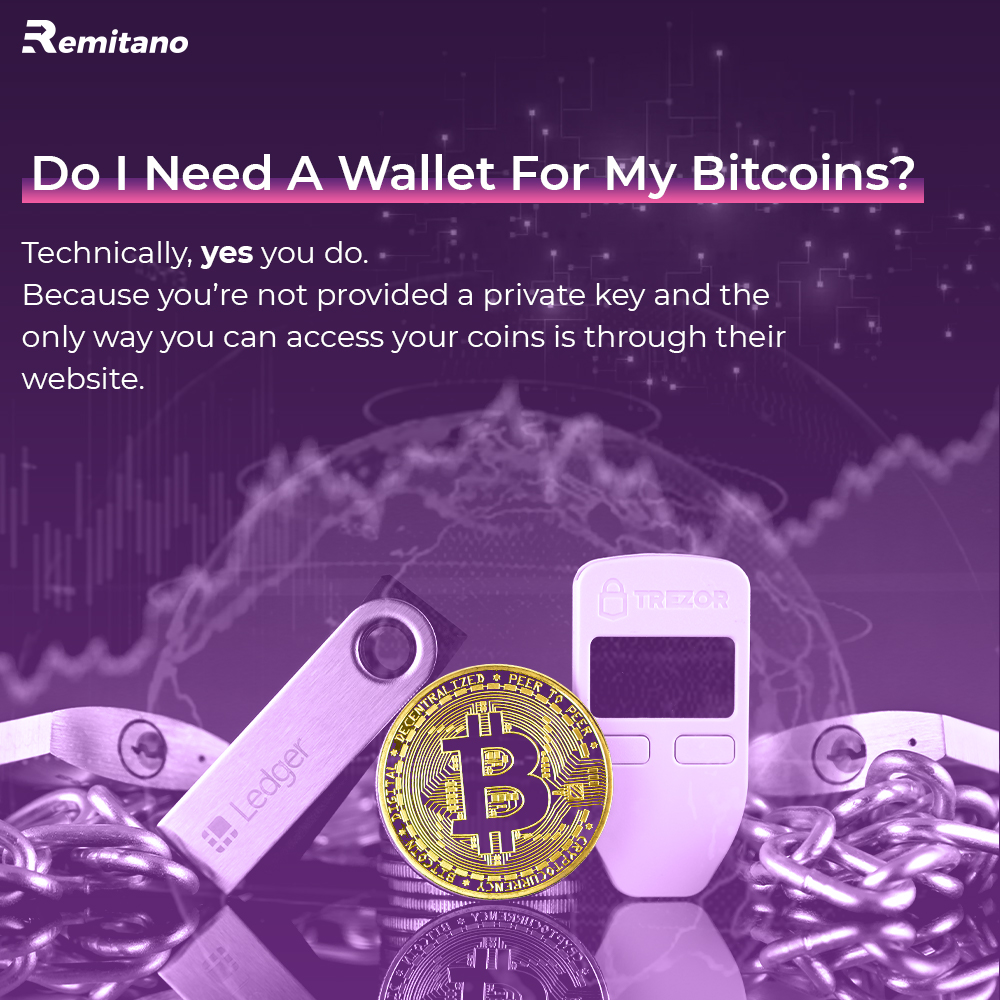
12.Do I Need a Wallet for My Bitcoins?
A wallet is essential and your decision of which service to use will depend on where you are located and the options available to you. If you are in Europe or North America, you are best off buying Bitcoins at a large exchange which ensures the best prices:: <strong>Kraken</strong>, Coinbase, <strong>Bitstamp</strong>. China, Japan, and South Korea all have exchanges that are appropriate for those countries.
After you have bought your Bitcoin, you can use a real wallet to store it. Trezor and Electrum wallets will work anywhere in the world, no signup required or intermediaries are required.
13.What is the Best Bitcoin Wallet?
Here are a few good wallets whose features may vary according to each user's unique needs.
- Coinbase: Recommended for US-based clients.
- Trezor: Recommended for security.
- Electrum: Recommended for desktop
- Robinhood: Recommended for buying and selling
- Exodus: Recommended desktop (best user interface)
- Mycelium: Recommended for Mobile
- Blockchain: Best online Bitcoin wallet.
- Remitano: Best for Nigeria, Malaysia, Vietnam and Indonesia-based users.

14.What are Bitcoin Private Keys?
Private vs Public Keys
How Do Private Keys Work?
Here, the sender and receiver share a unique key between them. This key is in the order of 128 bits long to be secure enough today. You encrypt the message with this key, send it to the receiver that decrypts the message with the same key.
If you both keep the key secure, only you can encrypt-decrypt messages. Sometimes, this is also referred to as <strong>symmetric-key cryptography</strong>.
How Do Public Keys Work?
In this case, you give the rest of the world the key to encrypt the data for you. This key is in the order of 4000 bits long to be secure enough today. They encrypt the message with this key and send the message to you. Everyone in the world has this public key and still can't read the message. This happens because it takes a different private key (again about 4000 bits long) to convert the encrypted message into an unencrypted message.
If you correctly keep your private key private - only you can read messages encrypted with your public key. Sometimes, this approach is the same as\
<strong>Asymmetric Cryptography</strong>.

15.Can My Bitcoin Account (Wallet) Get Hacked?
If you're talking about Bitcoin wallets, the answer is that they are very safe. But they are only as reliable as the person that is using them. Try to keep a clean computer (malware-free) and only access the wallet when required. Use as many safety precautions as possible. For example, <strong>2-factor authentication</strong>, and consider a hardware wallet if you are getting serious about investing in digital assets.

16.What happens if My Bitcoins Are Stolen?
In certain instances, the hacker is caught because he is not really cautious. Typically, the blockchain evaluation enables the 'stolen' address to be compared with other <strong>BTC addresses</strong> most definitely belonging to the same person.
The inputs and outputs will then be checked to see whether one of the addresses is in use. For example, if the hacker sends Bitcoins to a specified exchange address, and the exchange will know whether it was cashed out (of any bank account).
Thankfully, today, there are millions of BTC addresses recognized as exchanges operated by BTC. And even if the checks aren't sufficient right now, they might be tomorrow.
Want more insights on how to avoid scams? Read our article on <strong>5 Most Common Crypto Scams in Malaysia (and How to Avoid Them)</strong>.

17.Is Trading Bitcoins Safe?
If You Mean Fiat Currency by Cash
Answer: No. Since you might lose interest against the individual or even all the fiat exchanges.
If You Mean the Protection of Buying Power
Answer: It's a 50:50 chance. Bitcoin lacks a bargaining force against Fiat. At present, that appears impossible. Although we face many uncertainties, which have taken control of the world's reserve currencies, most of such concerns are focused on nothing other than diplomacy.
If You Mean Whether Buying Bitcoin Keeps It from Theft
Answer: It depends on where you keep it, as the blockchain itself is incredibly secure. That is to say; Bitcoin always needs a secure hardware wallet to keep it safe. Your Bitcoin may be subject to theft if you expose it to a weak exchange or to an unsafe wallet, most likely one that is online in some fashion.
18.What is Lightning Network?
How does the lightning network work? As suggested by <strong>Thaddeus Dryja and Joseph Poon in the 2015 White Paper</strong>, the concept is focused on a framework that rests on Bitcoin blockchain and ultimately builds on it.
The <strong>lightning network</strong> is composed of user-generated channels that send payments back and forth in a secure and trust-less fashion (trust-less means that you don't need to trust or even know your counterparty).
19.What are the pros and cons of using Bitcoins?
Pros
- Greater liquidity.
- High growth potential.
- User Autonomy.
- Discretion of trades.
- Peer-to-peer focus.
- Elimination of banking fees.
- Mobile fast payments.
- Accessibility.
Cons
- Scams.
- High price volatility.
- No refunds.
- The potential to be replaced.
- Too many dangers of Bitcoin mining.

20.What Bitcoin Terms Does a Beginner Need to Know?
20.1 Address
A Bitcoin address is a virtual location where Bitcoins can be sent to you. It is usually displayed as 23-35 characters.
20.2 Wallet
A wallet is a software for storing your Bitcoins. Unlike an address, digital wallets can hold balances.
20.3 Bit
Bit refers to the smallest unit of a Bitcoin. This fragment of Bitcoins is necessary for an equal exchange of goods and services.
20.4 Block
A block is a file that contains information about Bitcoin. Such data is permanently stored away.
20.5 Confirmation
In cryptocurrencies, confirmations are indicators of how many blocks have passed before the payment was applied to the blockchain coin. More number of confirmations increases the safety level of a transaction.
20.6 Hash Rate
Hash rate (also called hash power) is the rate at which the crypto mining system runs. The pace of mining is vital for it to be effective because the miner requires it to solve problems, to attach a block to the chain, and to gain rewards before others.
20.7 Cryptography
Cryptography is a way of utilizing intricate mathematical concepts to preserve and transfer data in a specific type such that it can be interpreted and accessed only by those by which it is intended.
20.8 P2P (Peer-to-peer network)
In the field of currencies, P2P applies to the exchanging of currencies, data, and trades that are not generated or controlled by the central bank.
20.9 Double Spend
Double-spend is a possible weakness in a digital cash system where the same digital coin may be used more than once.
21.What Are the Emerging Bitcoin Trends of 2020?
Here are a few trends we have seen so far in 2020.
- Bitcoin Halving.
- Bitcoin's Transition to Digital Gold.
- Creation of Central Bank of Digital Currencies (CBDCs).
- Adoption of lightning network.
- Adoption of a larger global scale blockchain.

Read the full review of the trends on <strong>"The Future of Bitcoin: 2020 Outlook"</strong>.
Conclusion--How Does Bitcoin Work for Beginners?
Bitcoin works pretty simple and fine for people looking to invest in it, or gain general knowledge about trading cryptocurrencies. As a matter of fact, Bitcoin could be the currency of the future. With the shocks and fluctuations that are causing a great deal of instability on the stock market, people are starting to look at Bitcoin as a better alternative than traditional payment gateways.
If you want to learn more about how Bitcoin works, join Remitano , a global marketplace where users can buy and sell Bitcoin quickly and safely. Here's a short video link to get you started on how to use Remitano.
What is your opinion on how Bitcoin works; is Bitcoin truly the future digital gold? Leave your thoughts in the comment section.