Today, we will continue with the series on the blockchain application. Over the past few weeks, we have broken the topic into discussing about blockchain applications in financial services, the health sector, and the Internet of Things (IoT). This time, here is the blockchain application in government (the public sector).
Understanding the Public Sector
The public sector comprises those areas of the economy controlled directly by the Government (whether elected or appointed). One of the core purposes of the Government is to organize society for the common good of all. By that, resources will allocate based on welfare needs and not profit motivation.
Planning an efficient and equitable resource allocation mode is a common problem that the Government often encounters. Unfortunately, most governmental organizations don't have systems that give stringent rules that favor financial discipline. The lack of appropriate structures stems from the general assumption that government resources belong to no one in particular. Hence, the drive to improve the system to eliminate waste is not there.

credits:medium.com
With the introduction of blockchain technology, government agencies, departments, and projects can set up a system that automates administrative processes. This innovation will increase trust and foster a culture of transparency and accountability.
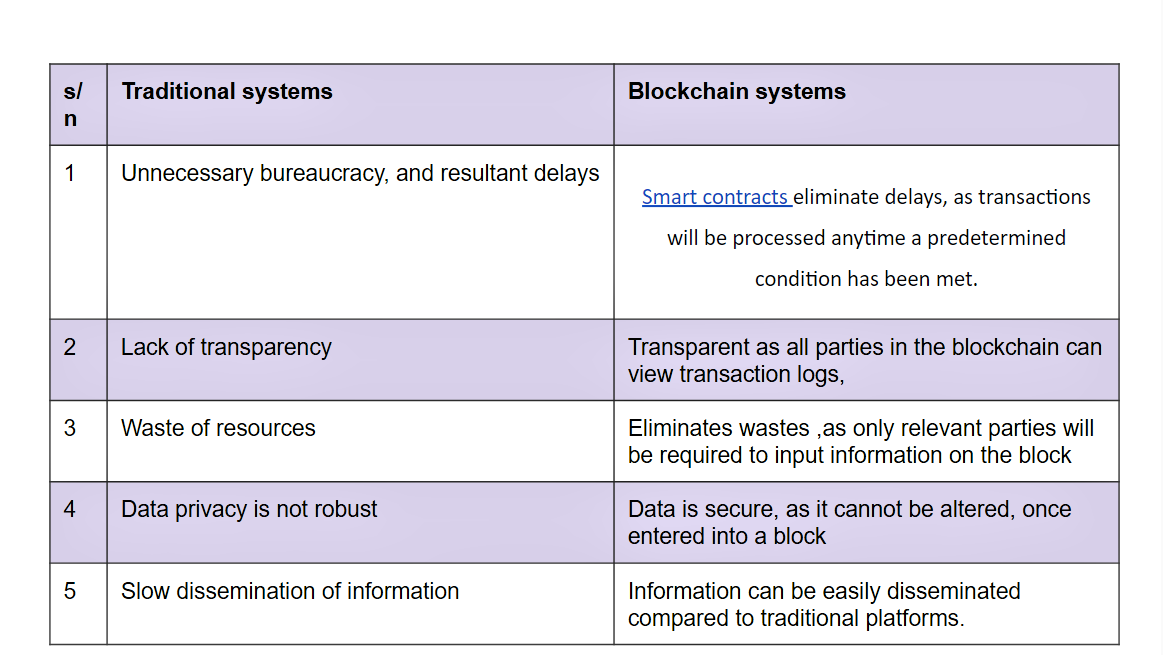
Comparison between Orthodox Government Systems and Blockchain Government Systems
How Governments can leverage Blockchain Applications
Governments around the world are using Blockchain applications in the following areas:
1. Procurements and government contracts
The current process for procurements and contracts in most government agencies and departments is usually slow and tedious. In addition to this challenge, there is also a lack of adequate transparency in the contract bidding and approval process. Thereby creating loopholes for corrupt government officials to manipulate the procurement process to favor their preferred applicant.
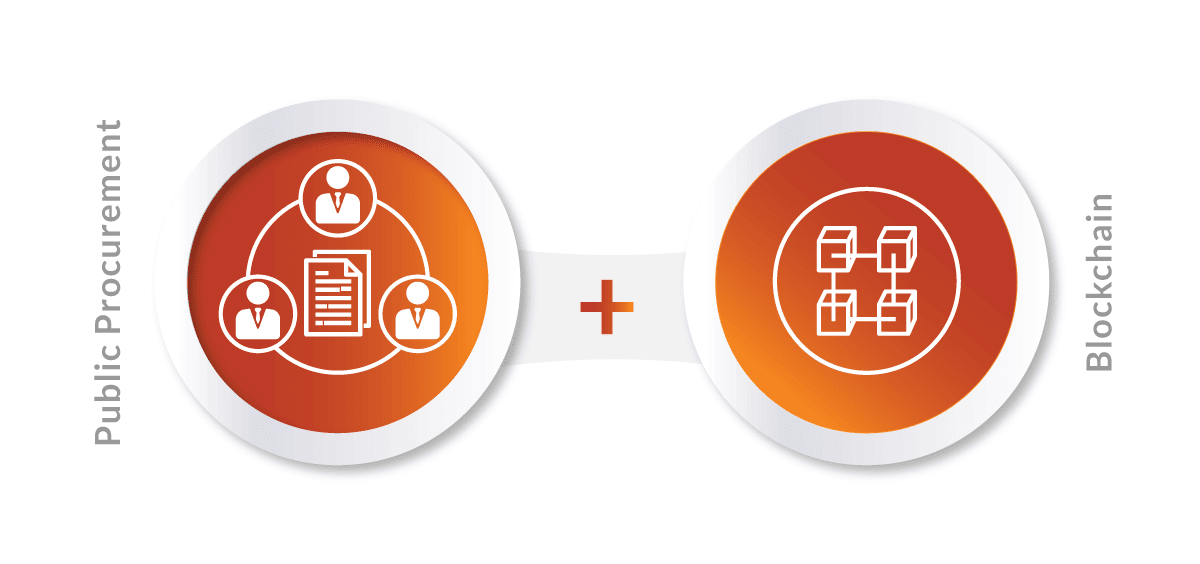
The procurement process will improve if we adopt Blockchain technology to automate and streamline the contract bidding process. One of blockchain's most significant advantage is the immutability of data. It can prevent bidders from altering any information entered into the chain.
Credits: Quintagroup
An example of a state implementing blockchain solutions in its procurement process is the Seoul district of Yeongdeungpo-gu, South Korea. A blockchain solution was used to assess all regional bids in 2019. As a result of the success recorded from the implementation of this initiative, the project won the Grand Prize in the "Contest for Anti-Corruption Best Practices" in 2019.
Another government that has applied this technology is the Canadian Government. They announced the creation of an Ethereum blockchain platform that will explore different avenues of efficient organization of government contracts and foster clear direction in the approval process.
2. Elections
The present system of conducting elections into public office still has inconsistencies, manipulations, and distrust. Citizens have little faith in the electoral processes of most countries because the existing structure is not transparent enough.
This critical situation has prompted several individuals to suggest an electronic voting system. Though it would give faster and quicker results, there is still a security problem. It is because hackers can attack the central server so that votes altered and manipulated.

Credits: dev. to
The application of blockchain technology can solve this problem and ensure that there is an end to end visibility and data is immutable. Basically, each voting unit can upload its results instantly; once voting is concluded, nothing can be altered.
Sierra Leone is one of the few countries that has successfully implemented blockchain technology to improve its electoral process. The votes were stored on Agora's Blockchain and have been available for any interested party to review, count, and validate.
3. Registry
Have you ever tried to register the title of your land property? You'd most likely find the process neither easy nor straightforward if you have. In addition to the unnecessary paperwork involved in the process, there is still the fear of record falsification. These situations can be avoided if the land registry is done via the blockchain platform.

Credits: coinpedia.com
In April 2016, Georgia's National Agency of Public Registry (NAPR) worked with Bitfuri Group to actualize registering landed properties on a blockchain. The Georgian resident begins the process with a title enlistment request through the approved legal official. After all, the authorized officer records the title on the private Exonum blockchain.
The Exonum hash is tied down on the open Bitcoin blockchain. This innovation has brought a 90% decrease in the general land library cost. Land enrollment time also decreased from 3 days to a couple of minutes.
4. Identity management
At its most fundamental level, identity is a combination of claims about an individual. This typically comprises the first and last name, date of birth, nationality, and some national identifier, such as national identification number, driving permit, and so forth. The Government manages these kinds of data centrally on its dedicated servers.
Most people do not have access to a medium by which they can process a valid means of identification. As a result, around 1.1 billion individuals worldwide aren't able to validate claims of their identity. This lack of access leaves many of the world's population in a helpless state -- incapable of casting a ballot, claiming property, or opening a bank account.
With the use of blockchain technology, the Government will be able to solve issues of physical access to data capture centers, stolen identities, and data insecurity. Take Swiss government's utilization of the Ethereum blockchain to give decentralized IDs as an example. The undertaking was propelled in November 2017 and was restricted to private residential use in its first stage. Currently, the ID can access other public services, including casting votes.

Credits: coinsutra.com
5. National food and drug administration
Ensuring an adequate and proper supply of food and drugs is among the fundamental tasks of the Government because food constitutes one of the essential human needs. However, managing the national collection of food and medicines can be onerous. he supply source is usually diverse, and many crucial data are not often captured. Therefore, without proper tracking and records, we may be unable to estimate food and drug supply appropriately.
Through blockchain technology, government agencies can keep track of essential commodities supply while monitoring their movements. This will make it easy to track cases of contaminated foods and take proactive steps to reduce food shortages.

Credits: world publicity blog
A case study of a government that has implemented blockchain solutions to manage food and drug supply is the FSA or Food Standards Agency of the UK, which started a pilot project in 2018, utilizing blockchain innovation to monitor the meat supply from slaughterhouses.
Even though many countries are yet to recognize cryptocurrencies as an asset class, governments worldwide are implementing Blockchain solutions to address the different issues emanating from public resource management.
A considerable volume of academic grants is being delivered to speed up the research into using blockchain technology in public sectors. Finally, we hope that with success stories from the impact of blockchain solutions, more people will examine the other benefits of digital currency ecosystem.