The emergence of new blockchains in the cryptocurrency world has been a rising phenomenon. While this development comes with many great benefits, they also come with specific problems---the sharing of data and tokens between several networks. But as difficulties surface, so does an innovative solution come through. A couple of innovations like Polygon have raised this challenge by creating linking networks to foster asset transfers. Yes, you heard it right - bridges. A well-known instance of these bridges is The Polygon Bridge. It came to life to improve the interoperability of the Polygon and Ethereum blockchains.
Now, the transfer of tokens by users between both blockchains can run smoothly and without incident; they have a cryptocurrency wallet that is compatible so far.
This article will help you understand more about this fantastic yet straightforward innovation and its strides so far in the cryptocurrency space.
Click here to buy and make payments quickly using Remitano Merchant Directory
Polygon Bridge: What Is It?
Polygon can be thought of as a structure for developing Ethereum-supported blockchain networks and grading solutions. This framework strengthens the Ethereum ecosystem by developing decentralized applications (DApps) with scalable prospects and improving transaction throughput with decreased costs. Several well-known DeFi platforms, including Curve, and Aave, already exist and function there.
The Polygon Bridge showcases its function in the interactive portion with tools and DApps.
Interaction is nearly impossible without the bridge's network linking to assets. This bridge acts as a secure cross-chain transaction link between Polygon and Ethereum. It also allows users to transfer ERC and non-fungible tokens (NFTs) to the Polygon sidechain via smart contracts. It has the strides that provide instant, less rigid scaling solutions, which also have an instant quality.
How Does It Work?
It begins with utilizing a dual-consensus framework to fasten its activities and also put it up for decentralization. Furthermore, the embrace of arbitrary state transitions on side chains that sync with Ethereum Virtual Machine (EVM) gives it an edge. Finally, in light of all these, there is an instant result on cross-chain token transfers as they are with no market liquidity restrictions or middleman risks.
Across the Polygon Bridge, cryptocurrencies' circulating supply does not impact the connection process. Instead, locking happens to the coins that leave the Ethereum network.
Similarly, these turn to the number of tokens ready for minting. They also double as pegged tokens on the Polygon network on a 1:1 form. Burning will occur to the pegged coins during the linking process of the tokens back to Ethereum before they get unlocked.
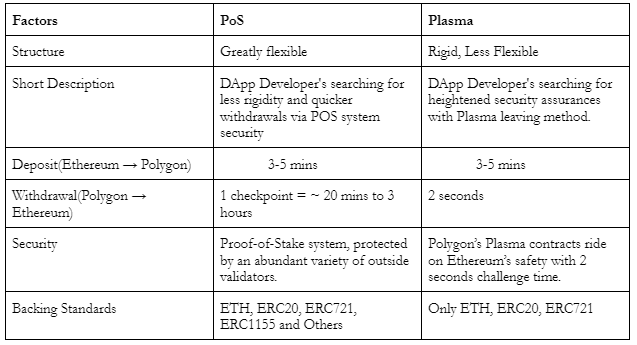
There are two bridges the Polygon possesses in the case of asset transfer: the Proof of Stake (PoS) Bridge and the Plasma Bridge. To protect its network, the PoS Bridge employs the Proof of Stake (PoS) consensus algorithm. On this bridge, deposit finishing has a near-instant effect.
Withdrawals aren't wired that way, though. They take some time to finish. The transfer of ether (ETH) goes smooth because of backing from the PoS Bridge. This action also includes the majority of ERC coins.
The Plasma Bridge steps into the picture for the exchange backing of Polygon's primary token, MATIC, and specific Ethereum tokens (ETH, ERC-20, and ERC-721). The Ethereum Plasma scaling solution, in this case, serves as a provider of enhanced safety.
Buy and Sell Ethereum fast!
Ethereum And The Poly Bridge
The token transfer isn't something complicated between Ethereum and Polygon anymore. This development is made possible by the PoS Bridge. For any user to carry this action out, there's a need for a compatible MetaMask wallet. It's also quite similar the other way around. In this case, the Plasma Bridge is what holders use to link tokens.
PoS Versus Plasma
Although these two bridges carry identical objectives, they also hold specific differences based on some factors.
Here are a few below.
Conclusion
The Polygon Bridge has a significant feature that revolves around interoperability, and this feature attracts a considerable lot of users to it and its surrounding technologies. Asset transfer between both blockchains can now occur in real-time and with complete decentralization. This link has also become an alternative for users who wish to explore the various DeFi spaces and DApps open on Polygon.
Create a Remitano account in less than 5 mins.