Ripple wallets are like XRP-based banks where you can store, track, and transfer digital assets. XRP is the coin of Ripple. The main idea of this cryptocurrency is to provide a channel of liquidity upon which finance companies, franchisers, and payment providers can leverage.
The XRP ledger acts as an open-source product provided by the renamed company --- Ripple Labs. Jed McCaleb and Chris Lisen co-found Ripple, and the company functions privately to help and connect across a network of banks and global financial markets. As seen today, this system is called the "internet of value."
To achieve its goal, Ripple runs on blockchain software known as RippleNet. The use of the platform ultimately lowers costs. That is extra fees attached to the storage, tracking, and transfer of digital assets and real cash.
Ripple wallets consist of 3 core products. These include the following:
The first one is the main product. Ripple-integrated businesses and partners use xCurrent as an exchange interface. The cool thing about xCurrent is that it doesn't depend on XRP.
xVia is a payment API and the company's newest product. It also doesn't require XRP. Xrapid, on the other hand, exists as the only XRP--orientated product and affords liquidity solutions to all users.
8 Best Ripple Wallets
Ripple partners with many wallets to store assets. Most of the wallet providers demand a startup token of 10 XRP. If you're still at the stage of consideration, here are the top 8 ripple wallets.
1. Ledger Nano S
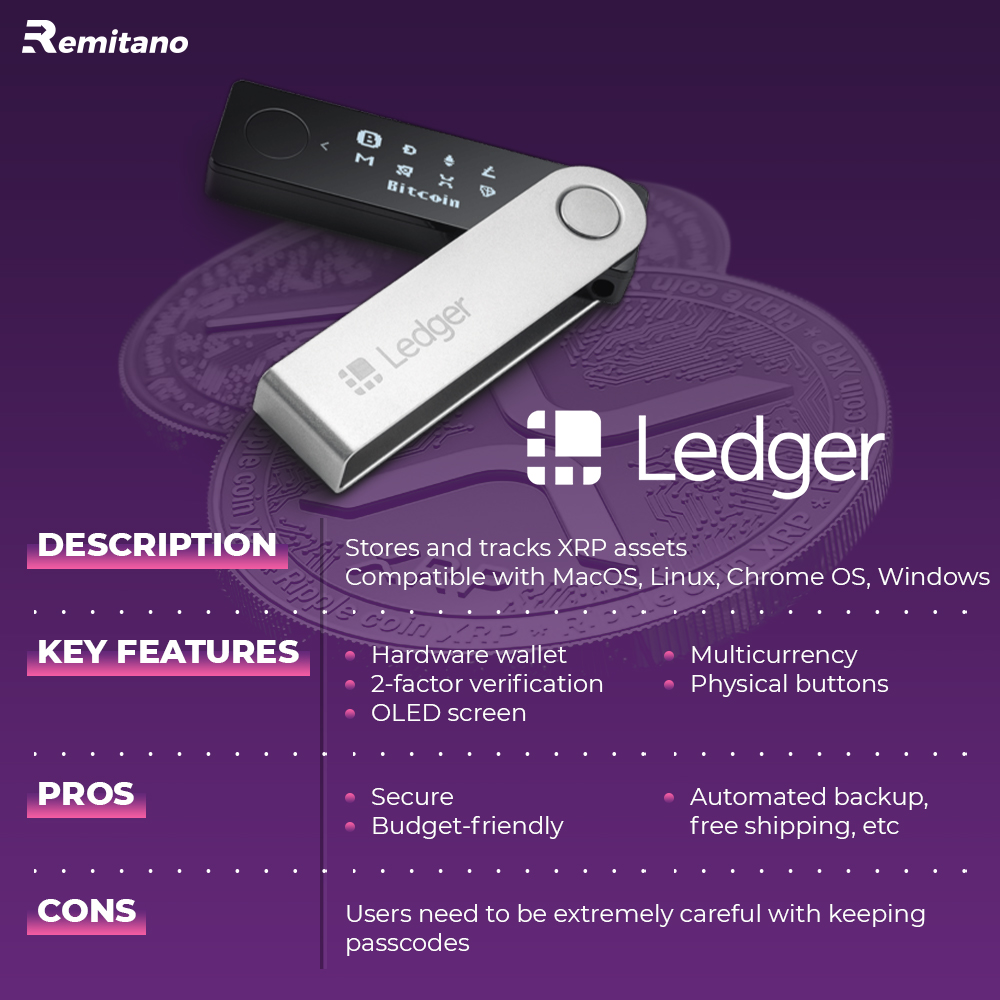
The Ledger Nano S is one of the few hardware Ripple wallets. Multiple cryptocurrencies, including XRP, support it. Being a hardware wallet means it comes in a USB format. You can touch and move around with it. The physical nature of Ledger Nanos S makes it the safest to keep assets and the most preferred among crypto traders. As an additional layer of security,
Ledger Nano Ripple wallet features 2-factor authentication comprising a pass and recovery phase. Ledger Nano S offers its users the ability to not only exchange and store XRP, but to also track digital currency.
 \
\
View Ledger Nano S here.
2. Toast
Toast is one of the best Ripple wallets for traders who want something fancy. It is open-source and compatible with a host of desktop and mobile interfaces. The most exciting feature of Toast is how simple the design is. Almost anyone ---young/old or beginner/experienced dealers can use it.
As an online wallet, the private keys can be completely locked down by only the holder. However, appropriate caution is needed when storing valuables on it. The reason is web visibility increases the risk of cyber fraud. On the bright side, backup, and password provisions.
 \
\
View Toast here
3. Edge
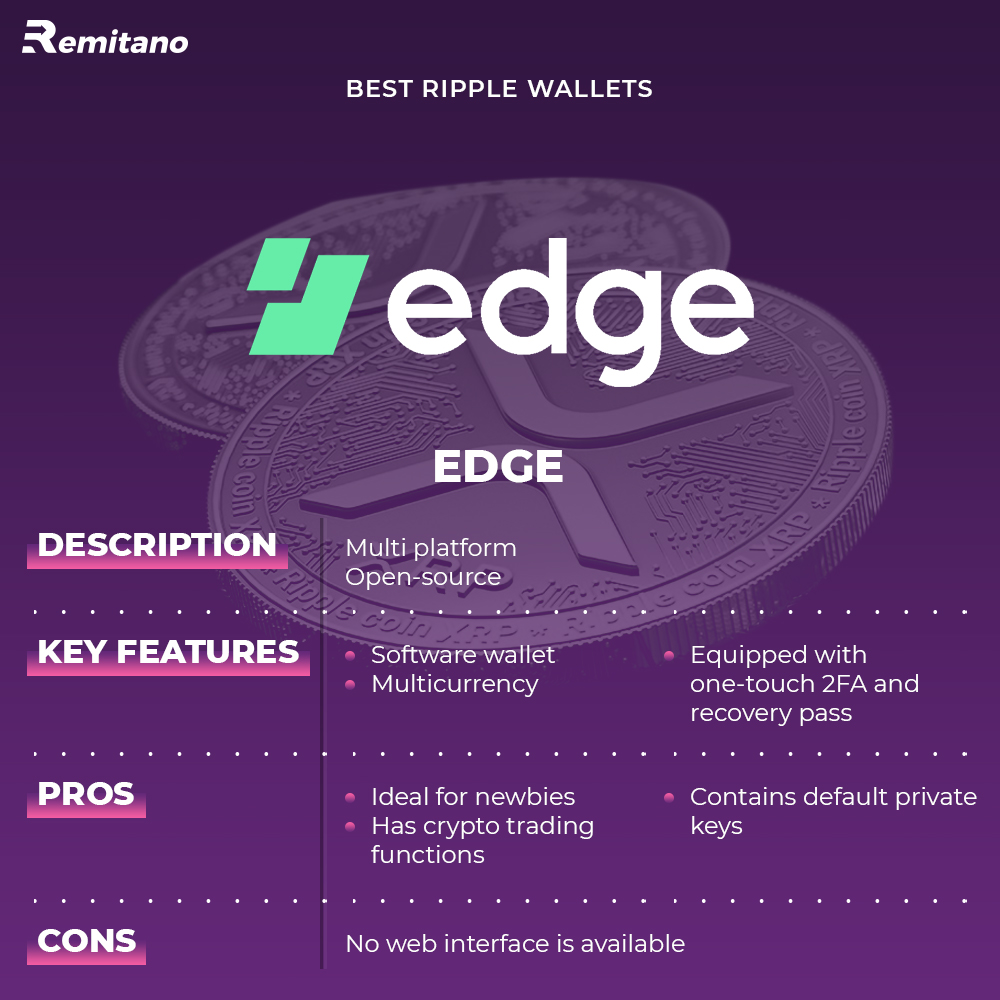
Edge came into the crypto space in February 2018. The free mobile wallet works on different devices, including Android and iOS. Basic Ripple operation is for digital and flat exchanges.
In terms of security, Edge gives the option of 2-factor authentication, which allows the pass and recovery stages. Using this XRP wallet, you can transact and store coins. But you'll need to sign up and open an account before full access to the software is granted.
 \
\
View Edge here.
4. Gatehub
Gatehub makes the list of both most famous and top Ripple wallets. XRP currency can be moved in and out of the wallet seamlessly.
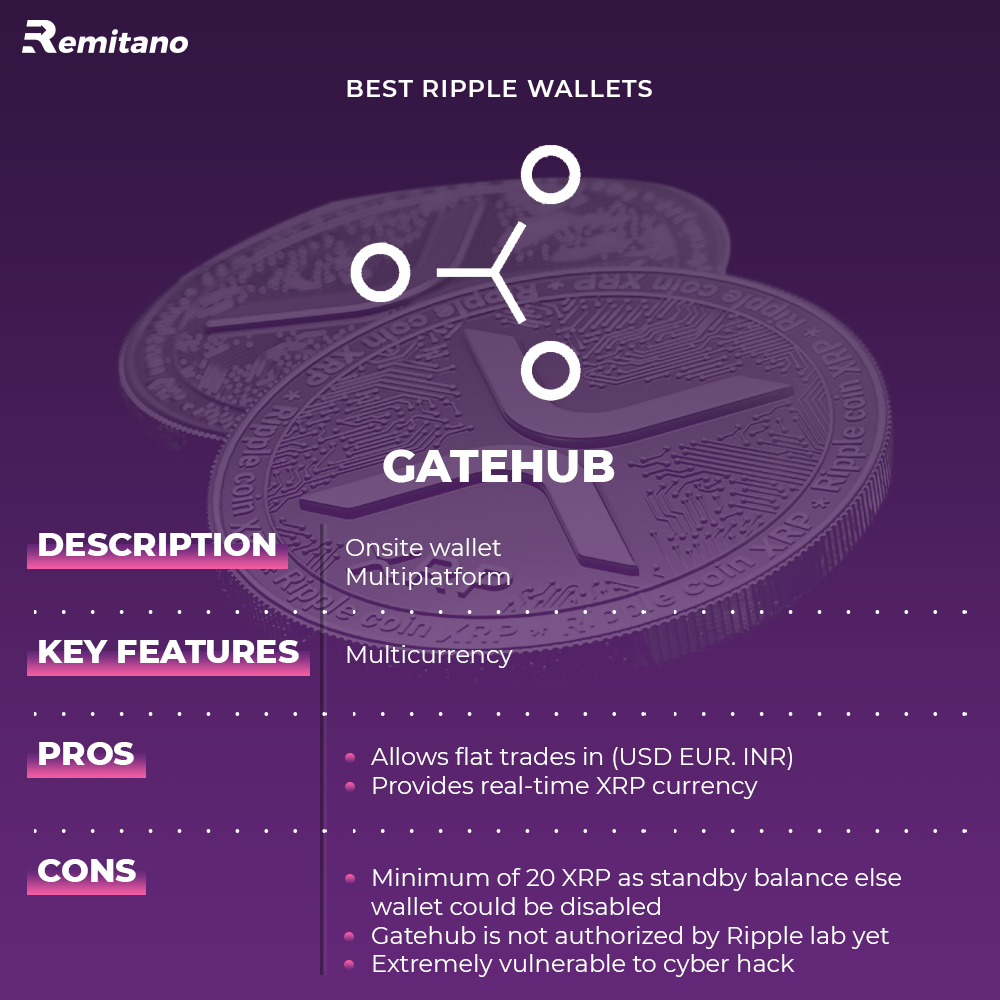
Gatehub has only an online presence, which means the wallet is prone to a potential hack. The layout is intuitive for newbies. There's 2-factor authentication installed for asset protection. The portfolio integrates cryptocurrencies such as Bitcoin, Ethereum, Ethereum Classic, and Augur.
When trading with Gatehub, a reserve of 20 XRP (minimum) is always required else the account shuts down after a while.
 \
\
View Gatehub here.
5. Cryptonator
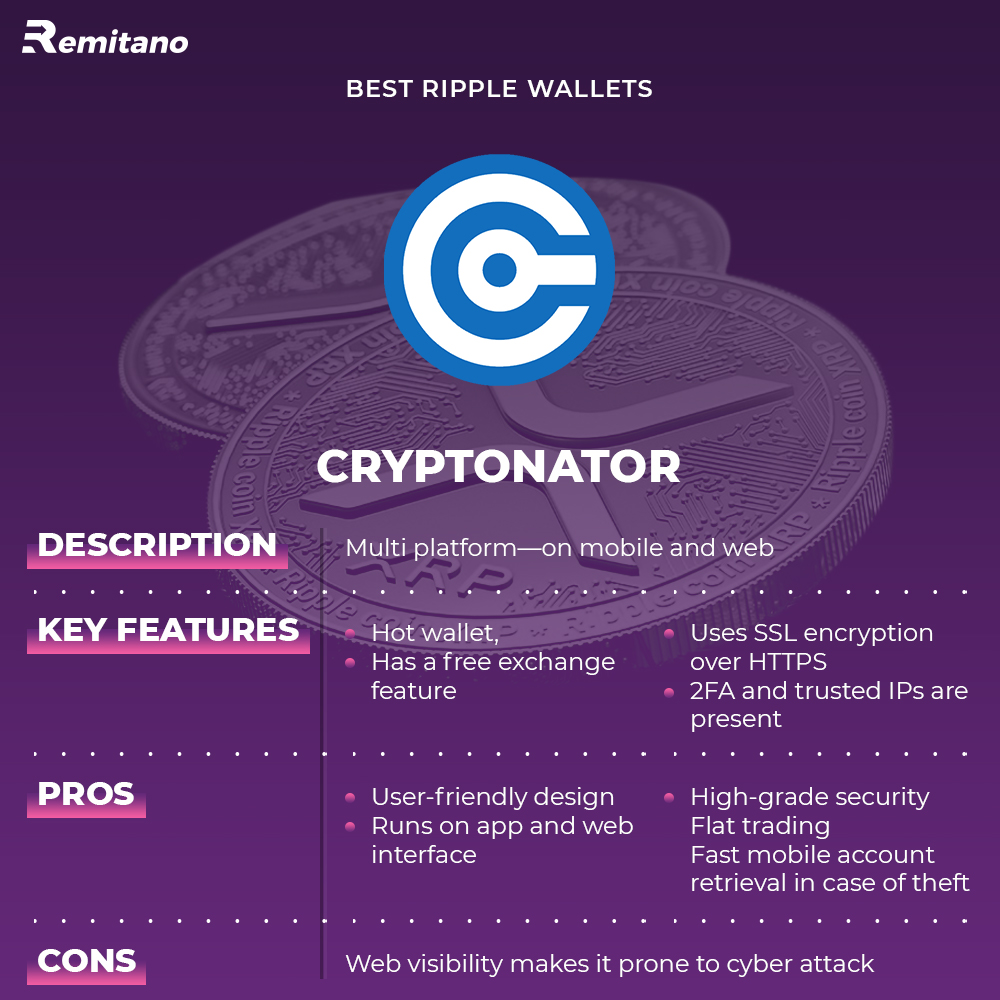
Cryptonator is another free wallet. It is commonly called a non-custodial portfolio. Non-custodial ripple wallets typically possess open keys that you alone don't manage. This factor creates high lability of storage. Users of Cryptonator can enjoy functionalities such as 2-FA, multi-currency trading, and app/web hosting.
 \
\
View Cryptonator here.
6. Atomic Wallet
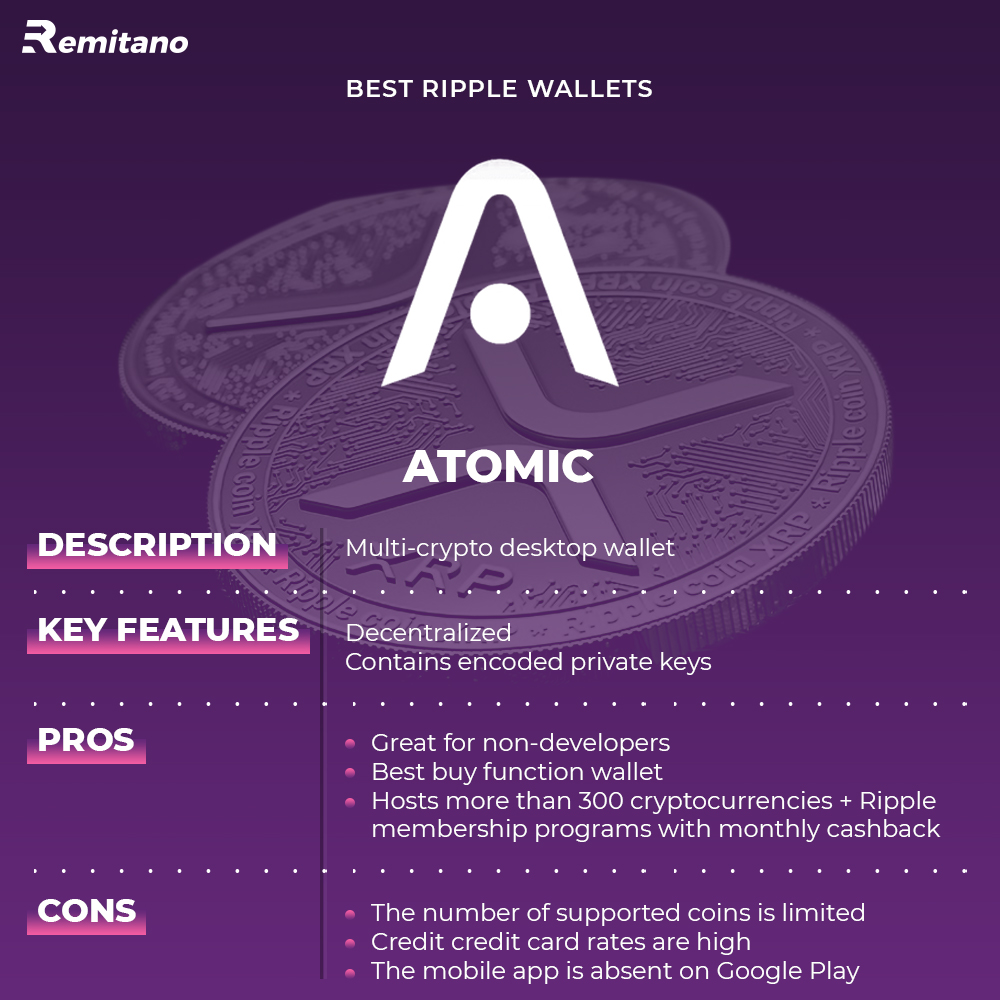
Atomic wallet is the only Ripple wallet linked to atomic swaps. The support eases up the process of exchanging currencies without any form of centralized intermediate. In other words, atomic swaps shorten transaction durations.
As one of the best wallets for Ripple, it features a user-friendly dashboard that works well with a ton of devices. The unique aspect of the Atomic Wallet enables account holders to consolidate software such as Ubuntu, Fedora, and Debian. The wallet is primarily a desktop app where you can use private keys, conduct payments, and cold storage funds away.
 \
\
View Atomic wallet here.
7. Ripple Paper Wallet
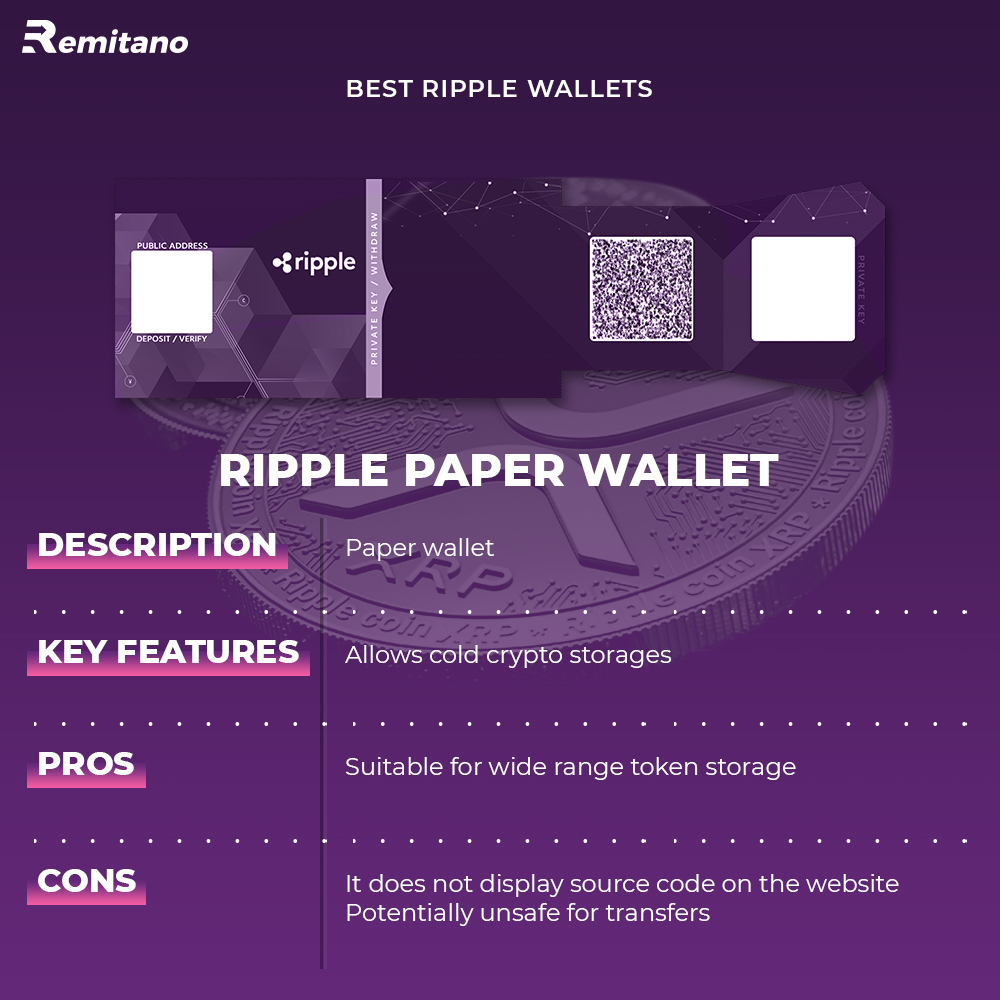
Ripple Paper Wallet is one of the XRP storage rooms. Here, you can store many digital currencies on a sheet of paper. Withdrawals and deposits of funds are in one place. Although paper wallets are simple to use, they have some loopholes that may discourage most. The most significant disadvantage is that your information --- coins, documents, private keys can be stolen. Another one is that you can't retrieve a hacked account.
Just like the majority of ripple wallets, you will need at least 20 XRP to run transactions successfully. In general, holders of a Ripple Paper Wallet must tread carefully. Besides these cons, this is one of the best wallets.
 \
\
View Ripple Paper Wallet here.
8. Coinpayments
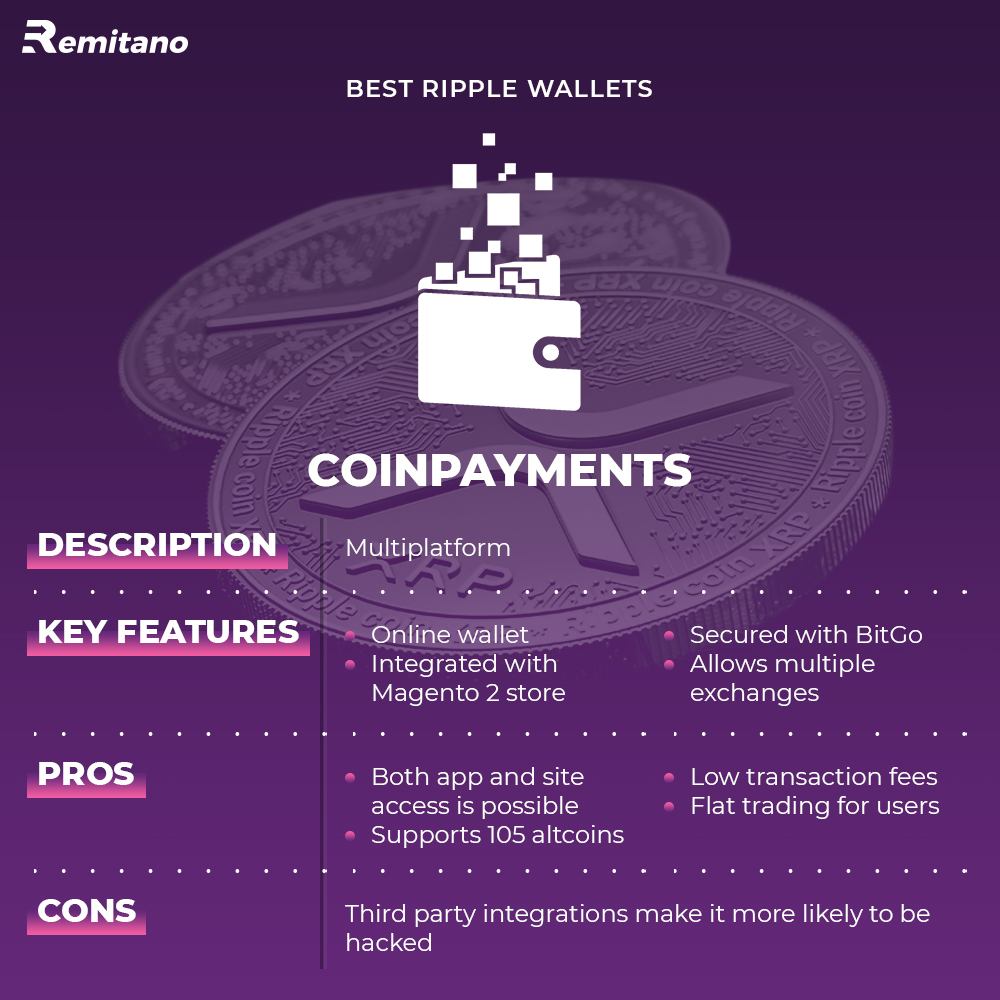
Coinpayments supports up to 100 altcoins. The online wallet charges zero fees for signups, deposits, and withdrawals. Transactions on their own may require payment, usually 0.5%. Currently, the company collaborates with several e-stores. So, account owners can shop directly from the platform.
 \
\
View Coinpayments here.
Do You Really Need an XRP Wallet?
YES, and here's why.
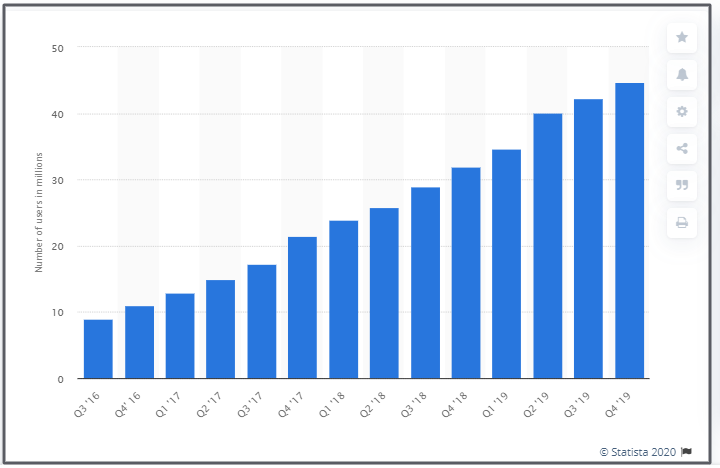
According to Statista., after the launch of the Bitcoin virtual currency in 2009, the number of Blockchain wallet holders increased, exceeding 44 million at the end of 2019. Blockchain is a network that has driven Bitcoin's success so far. It is a vital component of other cryptocurrencies.\
 \
\
In this illustration, we can observe how much Bitcoin ownership has grown in the last decade.
Ripple wallets cut down the amount of time spent international transfers, as well as on pre-funding of Nostro/Vostro accounts.
Financial institutions may choose XRP in real-time. This measure provides a source of liquidity to banks. Again, payment providers can take advantage of the platform to operate fresh opportunities.\
In that instance, Ripple wallets will serve as shortcuts for cheaper and quicker exchanges and payments.
Therefore, if you're persistently looking to bypass payment delays and overcharges from traditional banks, then you need Ripple.
Does Trezor Support Ripple Wallets?
Yes, but not all Trezor models. Trezor One is not yet connected to Ripple.
What is the Best Ripple Wallet?
You decide!
As you may know, so many good ripple wallets are available. However, in choosing an XRP wallet, you should pay attention to your needs and the providers' offering.
Below are some details to check when considering the best ripple wallets.\
1.Type of wallet: Hard/soft and hot/non-custodial
- Number of supported digital currencies: Bitcoin, Ethereum,
- Design and interface: User-friendliness and app navigation
- Multi-Platform Compatibility: Mobile or desktop, Android or iOs, Windows, Mac Os, or Linux.
- Features: Private keys control, 2-FA, SSL encryption, flat trading,
- Free or paid: Monthly or yearly subscriptions
- Visibility: App or web presence
- Reviews: Number of votes, customer complaints, and customer-provider interactions.
Conclusion
The global number of active wallets is projected from 5.8 to 11.5 million. This finding indicates the more and more users are jumping on the cryptocurrency bandwagon. Ripple wallets are just one kind, and the most critical step in choosing the best is to put your needs first. Finally, reconcile all security questions as there are no regulations in countries to protect users. if you have questions concerning this Ripple walllet, one good place to consult is Ripple Reddit.