Bitcoin began its life in 2009, as the creation of the mysterious Satoshi Nakamoto. From then, it has grown to be the most valuable cryptocurrency on the planet and served as the cornerstone for the crypto revolution. Without Bitcoin, none of the subsequent blockchains would exist.

Then we have Ethereum launched in 2015 by Vitalik Buterin and Gavin Wood. The blockchain started the smart contract revolution and transformed the way people interact with distributed systems and think of the industry.
Both projects serve very different functions in the current crypto economy. Yet, both are competing for market capital and development support. So, in this article, we'll talk about Bitcoin vs. Ethereum as we review their core differences.
Main differences Bitcoin vs. Ethereum
In a summary form, we can look at the following table for a summary of the main differences between both networks:
| Bitcoin | Ethereum |
| Consensus algorithm | Proof of Work | Proof of Work* |
| Block size | Block limit | Gas limit |
| Block creation Time | 10 min | 15 seconds |
| Buying power | Deflationary | Inflationary |
| Development tools | Limited | Fully Turing complete language. |
| Market cap 2020 | $299,039,503,684 | $53,083,326,868 |
| Cryptocurrency role | A Medium of exchange, store of value | A Medium of exchange, store of value, fuel for computations |
- soon to be replaced by Proof of Stake (PoS)
Some of the subtle differences perhaps cannot be grasped in the summary form presented before. So, let us break down each category in our Bitcoin vs. Ethereum table.
Consensus algorithm

Source: Open Ledger
Both networks, for now, use the consensus algorithm Proof of Work (PoW). Satoshi Nakamoto created the PoW mechanism as a way for the Bitcoin network to agree to a single history of events.
It went to become the dominant consensus algorithm in many subsequent blockchains, including Ethereum.
This consensus algorithm uses miners. These are people willing to spend high amounts of computational resources solving a complex mathematical problem.\
In return, each receives a reward for winning the race and all of the fees associated with the transactions in the new block. Currently, both Bitcoin and Ethereum work this way.
Now, the Ethereum version of PoW is called Ethash. Its main difference with the standard PoW algorithm is that Ethash is ASIC resistant. These are unique pieces of hardware that have been optimized for mining and are very expensive.
ASICs dominate the Bitcoin network, and they are seen as a source of centralization by the Ethereum community.
As a result, Ethash's code makes ASIC slower than traditional graphics cards, so these are less profitable to use in Ethereum.
This is why even as the mining difficulty of Ethereum keeps climbing, GPUs are still the dominant form of hardware for miners.
Finally, Ethereum 2.0 will be moving the network towards the Proof of Stake consensus algorithm. But this has not gone entirely into effect and will take at least another year for the complete transition to take effect. So, for now, Ethereum will keep using miners.
Block Size
This refers to the maximum size a block can have in the network. Here both blockchains work very differently. Bitcoin operates under the model of a block limit. A block has a definite size measured in megabytes that can contain a limited amount of transactions.
Currently, the theoretical limit is 4 megabytes, but blocks don't generally go past 2 megabytes. Once a miner has constructed a block from all the transactions pending in the network, he must find a hash representation of the block's information and a random number added to it, representing the mining difficulty.
The combined computational resources used by the Bitcoin network to solve these equations is known as the hash rate. Ethereum, on the other hand, has not only transactions but also smart contract computations.
So, Ethereum blocks don't have a limit in size but instead use a gas limit. Gas is the Ether's name to perform computations by the Ethereum Virtual Machine (EVM). Right now, each block in Ethereum can have roughly 10,000,000 gas in it.
Block Creation Time

Source: Forbes\
Again there are differences, but they are straightforward enough. Bitcoin has a block creation time of 10 minutes on average. This means that the PoW algorithm adjusts its mining difficulty to ensure that it produces a new block in about 10 minutes.
Not exactly 10 minutes. Some blocks may be done in 12, others in 7 minutes, but on average, the network must produce a new block in 10 minutes.
On the other side, Ethereum produces blocks every 15 seconds. The faster production time is that people mainly use the network for smart contracts and not just transactions. These contracts have to be able to give an output quickly. Otherwise, users lose patience with the system.
Buying power
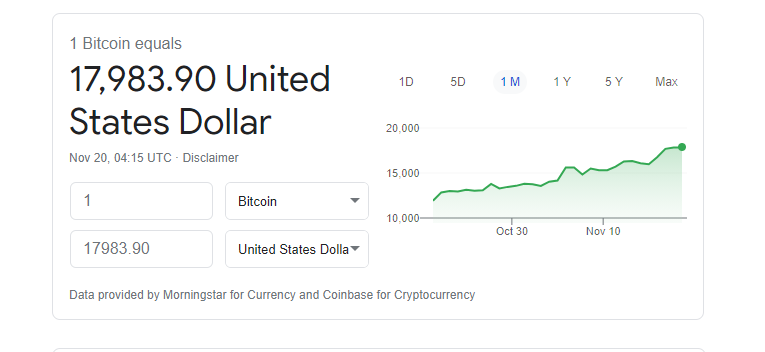
Again, we find differences between both networks. Bitcoin has a maximum total supply of 21 million BTC. This makes the buying power of the cryptocurrency deflationary, as the supply for it will decrease over time, making it more valuable.
On the other hand, Ethereum has no upper limit on how much Ether can be created. Each year, 18 million new Ether enters the market, making the cryptocurrency inflationary. As with time, the circulating supply of it increases.
By design, Bitcoin has a minimal capacity to host more complex computational operations built on top of the Bitcoin network. BTC is only to be a currency and never was planned to do more advanced things than transactions.
Ethereum's main feature is its ability to host and run smart contracts. These are small programs hosted on the Ethereum network that can be used to do anything. This is because they are built using a Turing Complete language, either Solidity or Vyper.
Market Capitalization
The Bitcoin's market cap is $299,039,503,684 and Ethereum's is $53,083,326,868. On a simplified analysis, it seems Bitcoin is far more valuable than Ethereum. But Ethereum can host other tokens and assets that are not Ether.
A completely accurate number of this asset's total value is impossible to make, but a rough estimate puts it at around $100,000,000,000.\
Some of these tokens are more valuable than Ether itself. So, the actual value of the Ethereum network as a whole is not solely represented by the market cap of Ether.
Cryptocurrency Role
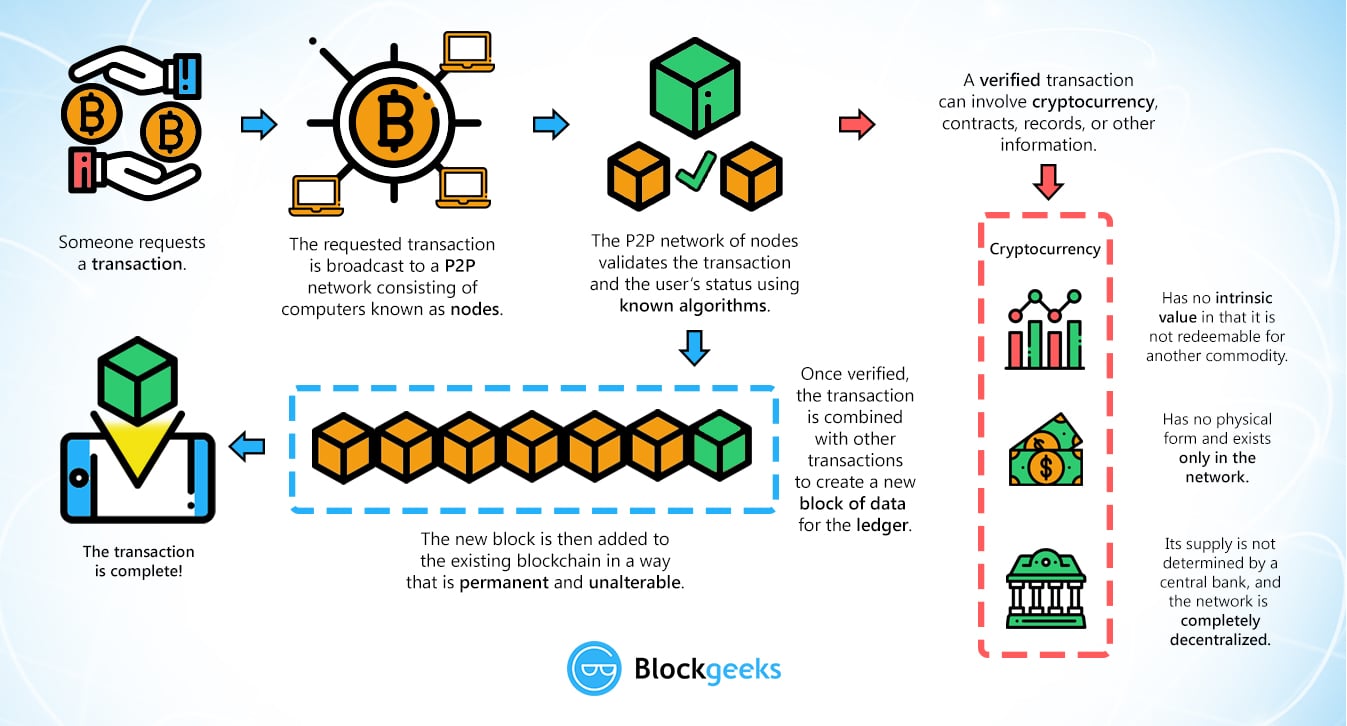
Bitcoin was always meant to be a digital money. A medium of exchange and a store of value. BTC is an upwards trending asset, so even if its short-term price is volatile, it appreciates against other assets in the long term. This is the role of Bitcoin.
Ether is also those two things, but additionally, it works as a way to pay computations in the network. Ether doubles as gas when a person needs to pay the fee for a transaction, interact with a smart contract, or deploy a smart contract. These fees in the form of gas are distributed to the miners and help boost Ether's demand.
This is why many call Bitcoin digital gold. An asset to hold and keep long term a form of investment. And Ether digital silver, an asset more liquid meant to be used, but also valuable. Each has carved its niche in the crypto economy.
Conclusion Bitcoin vs. Ethereum
There is no way to judge one network better than the other. By their very design, both are meant to serve very different roles in the crypto economy. One is intended for transactions, with a deflationary currency Bitcoin.
The other is designed to work as a global computer to deploy services in a distributed network using an inflationary currency, Ether.
Each works in different parts of the market for distinct roles. In the future, as the crypto-economy grows, Bitcoin and Ethereum will coexist not as competitors but as complementary assets for the future economy.