If you have been in the crypto space long enough, you would have heard a lot about yield farming, more so if you have become a decentralized finance enthusiast.
So what exactly is yield farming?
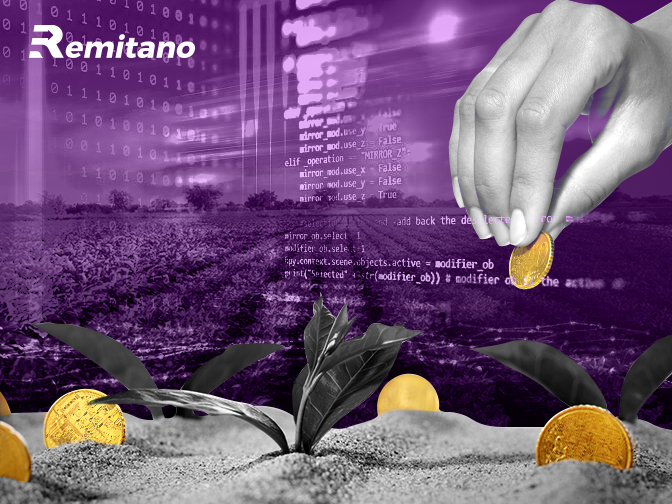
If you have been in the crypto space long enough, you would have heard a lot about yield farming, more so if you have become a decentralized finance enthusiast.
So what exactly is yield farming?
Yield farming merely uses your cryptocurrency assets to get more cryptocurrency assets. Sounds too good to be real right, well, of course, there is a catch.
Like everything that sounds too good to be right, there are certain risks attached to it.
Still, according to defi pulse, your one-stop-shop for everything decentralized finance, over 12 billion dollars' worth of cryptocurrency is locked in several projects, most of which can be called yield farms.
Well, some would say it all started when cryptocurrency projects needed to move from proof of work (the use of complex tasks such as solving equations) to proof of stake (randomly allocating the right to verify the next set of transactions amount of crypto staked in the project) to allow them to scale sufficiently.
Simultaneously, these may not be the exact definitions of proof of work and proof of stake.
I have tried to make it as simple as possible to understand.
Okay, so decentralized finance projects needed people to stake (a process of locking up funds in the form of cryptocurrency in this instance) their funds.
Of course, these projects need to offer some reward. These rewards could be in the form of multiple tokens such as the one you have staked or a different kind of token. Most projects use ERC-20 tokens.
Most people accredited the popularity of yield farming to the COMP token.
The compound finance project decided to distribute Comp tokens, a kind of governance token that gives holders the right to vote.
These tokens were shared as a form of reward to liquidity (in this case, refers to the ease with which an exchange or project can absorb orders without a massive fluctuation in price.
It is usually a function of how much they have stored on the exchange and how frequently people use the project) holders.
Since then, decentralized finance projects have in one way or the other tried to attract liquidity in the form of staking their project by offering various rewards incentives turning them into quite attractive yield farms.
After all, it is better to allow your currency to earn you some passive income than to leave it sitting idle in your wallet, there is a catch, however, and those are the risks attached to yield farming.
The Nigerian crypto community boasts of at least 100,000 active users.
On the Binance Nigeria telegram page, there are over 16,000 members, and that is just on telegram.
For one exchange, the yield farming fever would not skip such an active community, like in most places familiar sources of information on where to farm include google, social media, etc., popular sites for such information, in particular, are DEFI pulse and coinmarketcap.
However, there are quite a lot of fraudulent farms that would just as soon close down as you stake your funds, or farms with low security that can be easily exploited by security attacks leading to loss of funds from the project and subsequent farm closure.
In Nigeria and the world at large, there is a need to combine finding farms with maximal yields.
This is usually calculated as Annual yield percentage APR( basically the percentage interest your crypto would earn if it is locked up in that project for a whole year, including if you reinvest your profits).
Or Annual percentage rate APR (which is the percentage interest your crypto would earn if it is locked up in that project for a whole year minus if you reinvest your profits).
So you balance farms with a high annual percentage yield or rate with farms with adequate security and an underlying sound project.
Only invest in projects you can trust to avoid losing your hard-earned funds. As we always say in the crypto space, DYOR; do your research.
Like everywhere else, the first and most popular indicator is the Total value locked TVL (which is the total amount of cryptocurrency locked up in a project).
It can be measured in USD ETH BTC, a good measure of the liquidity of the project. It can let you know just how much yield farming is currently going on in the project.
It also lets you know what market share the project has.
Hence, even if you are too busy to do your research or just not knowledgeable enough, you can use the total value locked in a project to determine what is worth your funds and what is not.
After all, all those investors would not put their funds in an unsafe project.
However, it is worth noting that the more popular a project is, the smaller the yield usually is, as there are already quite enough funds to secure the project.
Hence there is a trade-off between safety and yield. Talented yield farmers would often look for less famous but secure yield farms with high APY/APR to invest in before everyone else.
Or engage in a complex web of farms such that yield from one farm is immediately invested in another farm and so on, doing their best to maximize yield and take care of their crops.
If you have been in the decentralized finance space long enough, you must have come across UNISWAP, with a market share of over 20% and a total value locked of over 2 billion dollars.
It is no surprise that you must have heard of UNISWAP by now.
UNISWAP is probably the most popular decentralized exchange that allows users to instantly swap between two tokens using what is known as an automated maker model.
Farmers or liquidity provides equivalent deposit amounts of two tokens hence adding more liquidity to the pool.
On this exchange, traders can exchange their tokens against this liquid without a middle man's need, usually an exchange.
These liquidity providers or farmers are then provided a reward for providing liquidity to the exchange.
This reward comes from the fees charged by traders using the exchange.
This is a credit platform that allows you to create a vault and store your crypto assets such as ETH, BAT, WBTC AND earn DAI with interest over time.
The DAI you earn can then be used for another yield farm making this a popular option. With over 2 billion USD in assets locked up, it ranks second on defi pulse and is a popular option.
A money market that allows people to borrow their crypto-assets. Anyone with an ethereum wallet can add their assets to the liquidity pool and earn rewards that add compound over time.
Compound currently ranks fifth on defi pulse with a total locked value of just over 1 billion USD.
A protocol that is a property of synthetic assets, allows anyone to stake synthetix network token (SNX) or ETH and get rewards as a result of such staking activities in the form of synthetic assets.
With a total locked value of over 1billion USD, Aave ranks fourth on defi pulse and another popular option.
It is a decentralized protocol that allows for lending and borrowing with interest rates algorithmically determined.
Lenders or farmers get tokens in return for staking their assets. These tokens also earn interest when you deposit them.
Curve Finance is also a decentralized exchange protocol that allows for the efficient swap of stablecoins (crypto coins backed or pegged to a relatively stable asset, usually the USD) with little to no price variation.
Curve finance currently ranks seventh on defi pulse and has around 900 million USD in assets locked up.
It is a liquidity pool with a structure similar to UNISWAP; however, it allows liquidity to decide the tokens they want to deposit, creating customized pools, unlike in UNISWAP, where allocation pools are already predetermined.
Farmers earn rewards based on trades that happen in their liquidity pool. Hence it would be best to deposit in a popular pool.
This is by no means an exhaustive write-up on yield farming in Nigeria.
However, if you are entirely new to yield farming, this would be an excellent place to start.
The list of projects in this write up is also by no means a suggestion. It would do you well to do your research before committing funds anywhere.
You could also take an alternative route using popular exchanges like Binance that allow you to farm In featured projects on their exchange.
If you do not trust your judgment, you could leave it up to an exchange you trust.