In this article, we will give a comprehensive guide on Ethereum wallets. We will look at the basics of an Ether wallet, the types of wallet out there. And like always, we will recommend the safest and most suitable wallets.
Let's delve into the basics.
How Ethereum wallets work

Ethereum wallets are digital wallets that hold your Ether. Ether (ETH) is the official currency of the Ethereum network. Many people make the mistake of saying they are sending Ethereum (the blockchain network) when in reality they are sending Ether (the cryptocurrency).

Source: Medium
An Ethereum wallet has two unique identifiers; the public address and the private key. They are essentially a pair of locks and keys.
The public address is generally called the Ethereum address. An Ethereum address is a randomly generated 64-character alphanumeric string. This is the address you send to people when you want to receive Ether.
The private key, on the other hand, is a secret key that secures and unlocks your account. A private key is a very long randomly generated alphanumeric string that is used to generate your public address. In essence, your private key must match your public address before you can access or receive Ether.
Now that you understand how an Ethereum wallet works, the next step is to help you choose a wallet.
How to choose your Ethereum wallet
There are three basic factors that you must consider before choosing an Ethereum wallet. They are:
- Security
- Availability/accessibility
- Mode of interaction with the blockchain
Ethereum wallets are categorized into three based on the factors stated above.
1. Personal or 3rd party wallet
Anyone can create a personal wallet on the Ethereum network as long as you are connected to the internet. Creating a personal account offers multiple security options that give you absolute control of your private key and wallet address.
MyEtherWallet is the go-to platform to create a personal wallet on the Ethereum network. But it may not be as user friendly for newbies, as it is usually much easier to create an Ethereum wallet on a 3rd party platform.

Third-party wallets are hosted on a remote server, so they are easily accessible from any device. An example of a 3rd party wallet is the Ethereum wallet you created on a cryptocurrency exchange. Third-party wallets give you quick and easy access to your Ether on the exchange and also help you trade faster and easier.
Wallets created on exchanges are not usually the safest for a few reasons. One, your security key is held by the exchange so you have little control over your wallet. Secondly, you could lose your funds if the exchange hosting your wallet is hacked.
2. Cold wallet or hot wallet
Based on availability/accessibility, Ethereum wallets are divided into cold and hot wallets. All third parties are hot wallets because they allow access to your Ether from anywhere on any device so far you are connected to the internet.

3. Full or lightweight node wallet
This classification is based on how the wallet interacts with the Ethereum network. The full node wallet allows you to transact on the blockchain wallet by downloading the full copy of the blockchain on your device.
Lightweight node wallets (also called a light client) work by interacting with a trusted full node. Simply put, you can make transactions on the blockchain without downloading the full copy of the Ethereum blockchain.
Create your first wallet address on Remitano
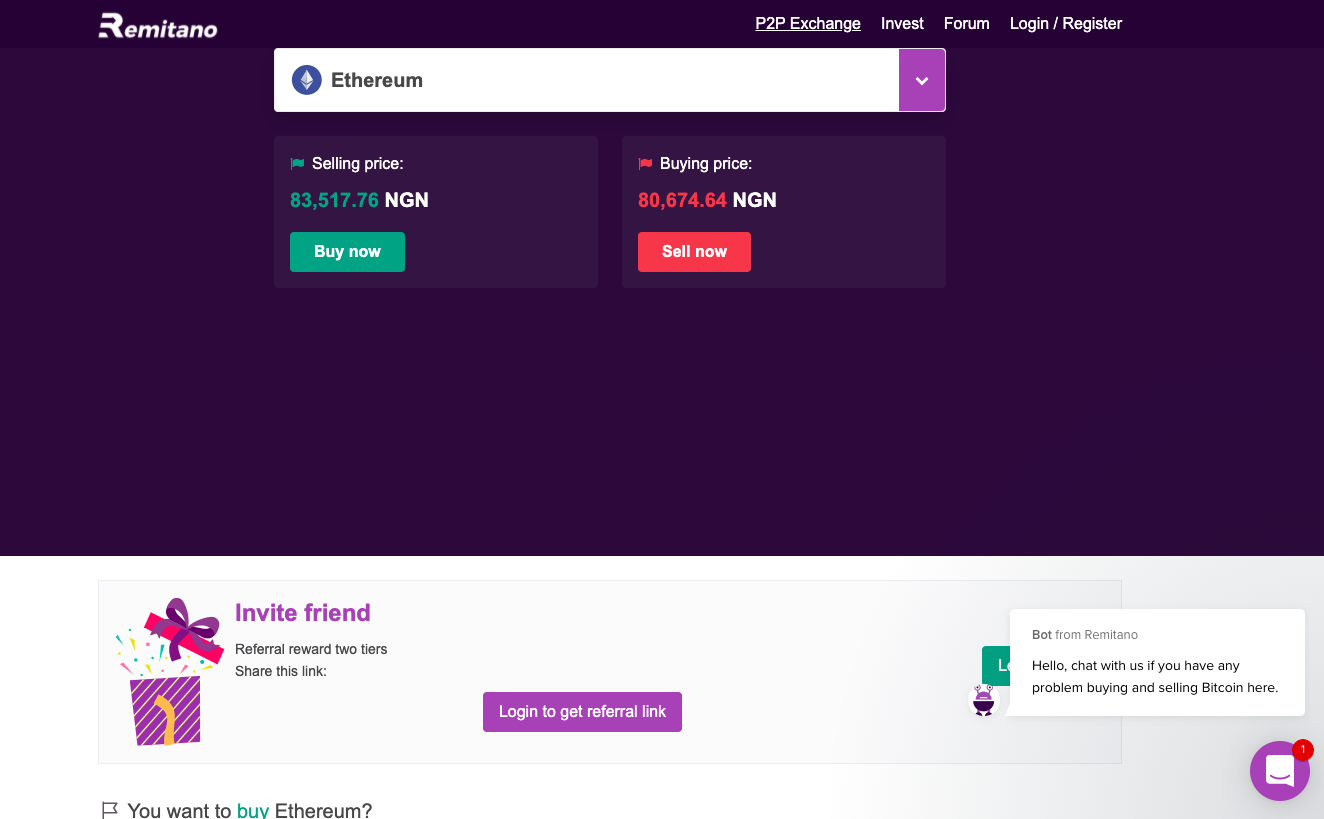
Now that you know the categories of wallets, you can easily create an Ethereum wallet on Remitano. Here is how:
- Go to Remitano.com to create an account with your valid email address
- Verify your email address to activate your account
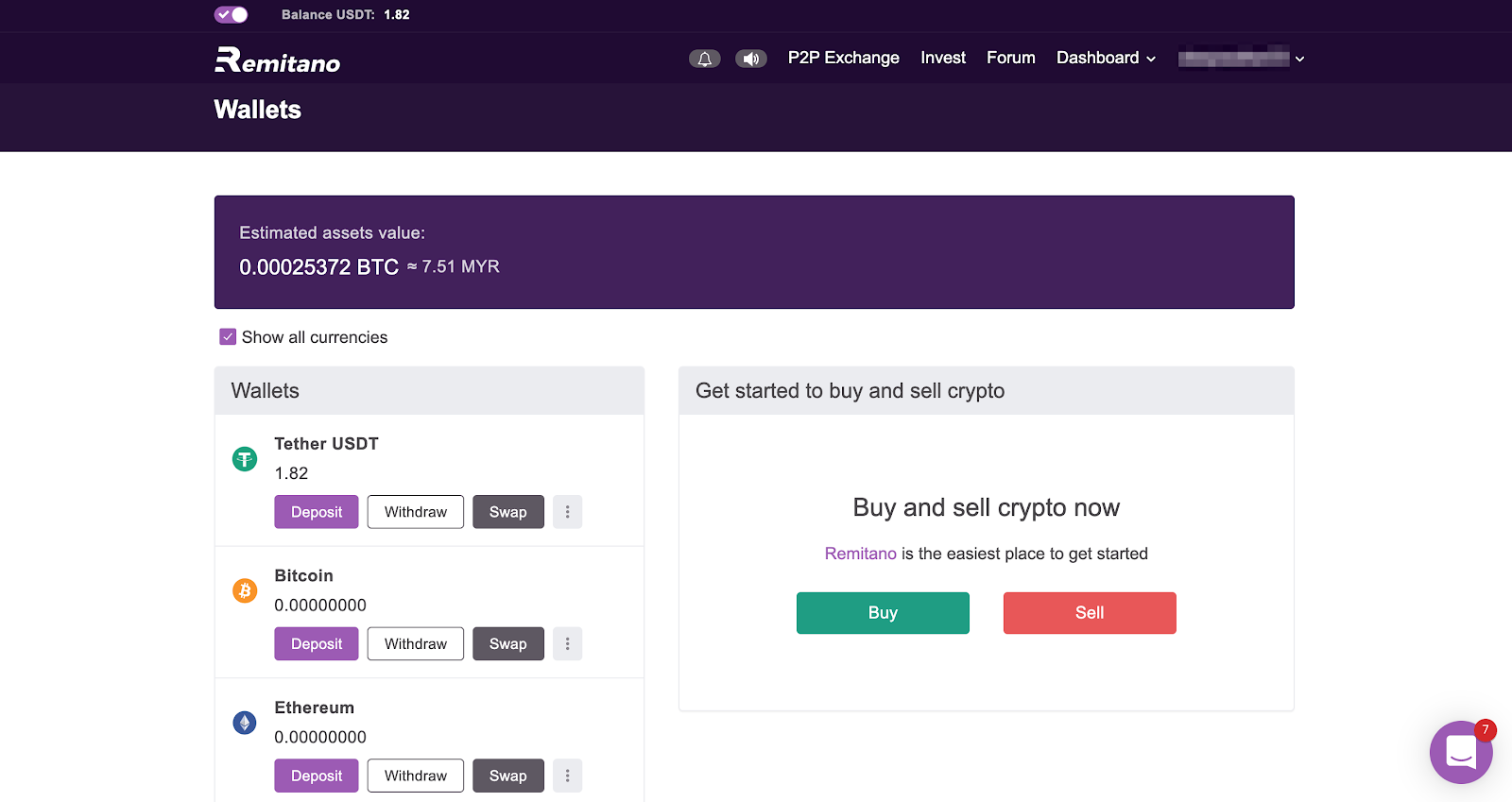
- Log in to your Remitano account to view your Ethereum wallet amongst other wallets.
- Get your Ethereum address by clicking on the deposit button. Copy the address and share it to receive ETH on your wallet.
- You can also buy your first Ethereum on Remitano. Simply click on the peer to peer exchange to buy ETH with your fiat currency.
MyEtherWallet
Another easy way to create an Ethereum wallet is to use the official Ethereum wallet provider service such as MyEtherWallet. Follow these steps to create an ETH wallet on My Ether Wallet (MEW):
- Visit MEW's website and read through the safety prompts that appear on the website. The prompts help you understand the safety precautions that will help you protect your Ether.
- After reading the instructions, you will see a prompt to create your password and set up a new wallet. Create a secure password and then download your Keystore file. It is essential to store the Keystore data in a safe place because you may need it to restore your account in case someone hacks it.
- The next and most crucial step is to save your private address or key and back it up in the safest place possible. Because if someone else with malicious intent lay their hands on it, you can kiss your fund goodbye, permanently.
- Now you can access your wallet by uploading your private key which unlocks it. There are different ways to unlock your MyEtherWallet, but the private key method is the simplest for first-timers.
Visit my etherwallet.com and repeat step 4 to authorise yourself every time you want to access your wallet to view your wallet, send or receive Ether.
Note: The guides above are focused on creating Remitano and MyEtherwallet Ethereum wallets because they are easy to set up. There are various Ether wallets out there, each with different setup processes.
Other types of wallets include;
4. Ethereum Mobile Wallets
Mobile wallets are examples of light clients because you don't need to download the blockchain to use them. Unlike the full node wallets, they depend on accurate data about the real-time state of the blockchain.\

Mobile wallets are accessible from any mobile device at any time so far you have an internet connection. The downside of mobile wallets is that they are prone to hack attacks.
Jaxx is one of the most popular Ethereum mobile wallets. Jaxx is currently available for android and iOS devices as well as Mac and PC.
Other well-reviewed mobile Ethereum wallets include Coinomi, Remitano and Lumi and atomic wallets.
5. Ethereum PC Wallets
Desktop or PC wallets are software wallets that you install on your PC. Although it may appear as if the software stores your Ether on the computer, that is not true. Instead, your PC wallet acts as a kind of keychain which holds the private key that allows you to access your Ethereum.
The PC wallets can be downloaded as a full node or a light node. The light node wallet is easier to run on the computer while the full node is more secure. PC wallets are generally secured than mobile wallets because your private address is stored on your drive and not on the internet.
However, your system must always be in your custody to claim ownership of your coins. You can lose ownership of your funds if your PC is stolen or crashes.
Our recommendations for reliable PC wallets are:
- Exodus Wallet - this PC wallet allows users to receive, store and transact Ethereum and other coins. It also supports BTC, LTC and other altcoins including Ethereum based tokens. It has an intuitive user interface and robust features that make it easy to use. Exodus wallet gives you absolute control of your cryptocurrencies because it saves your private key on your device.\

- Jaxx Liberty - This is the desktop version of the Jaxx mobile wallet. Jaxx Liberty allows you to manage a broad range of cryptocurrencies from your computer. The wallet is available as a Google Chrome browser extension in case you don't want to download the software. You can synchronise the software wallet with your smartphone wallet. This allows you to have 24/7 access to your fund.

6. ETH Paper Wallet
Basically, ETH paper wallet is a piece of paper that displays your wallet's security keys which are required for you to authorise and conduct transactions on your wallet. This is arguably one of the safest ways to safeguard your Ether.
The reason is that your Ether is not stored on the internet but rather on a piece of paper that you can keep in your safest holding.
Getting a paper wallet is quite simple. After creating an account on MyEtherWallet, save the Keystore code as recommended earlier, click the print tab, and that's it. A copy of your wallet details containing your security keys and a scan code will be printed.

7. Ethereum Hardware Wallets
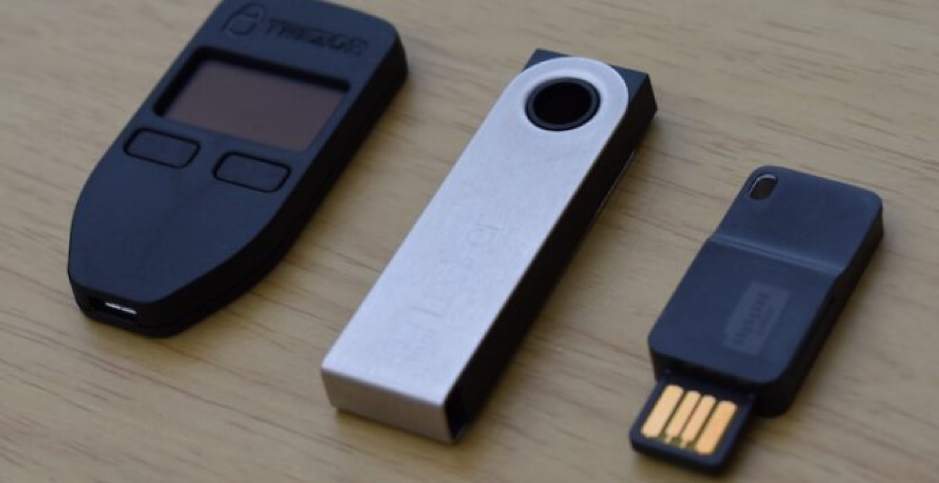
If you are looking for the coolest and safest form of Ethereum wallets, then you must have a hardware wallet. Hardware wallets are like flash drives that you can store your crypto funds and access them whenever you want.
You can access your Ether by plugging the drive-like wallet into any computer. New hardware wallets come with screens that display the value of your funds and let you authorise transactions.
Source: Quick Penguin
Hardware wallets offer robust security. They are regarded as among the safest Ethereum wallets in the market. Apart from the fact that your keys are stored offline, the device also encrypts all your coins, making them hack-proof. The wallets also offer 2FA authentications and (or) passcode for additional security. They are the most expensive wallet, and one can cost up to $100.
Three most popular ETH hardware wallets are;
8. Ethereum Web Wallets
Web wallets are hosted on a website. They employ cloud storage infrastructure to allow users to access their Ethereum from any browser. They are simpler to use and more efficient compared to other wallets in terms of speed.
Web wallets are wallets hosted on a website; they may be custodial or act as an interface for users to generate and interact with their accounts. Either way, they keep your security keys online on a 3rd party database. This makes web wallets dangerously prone to hack-attacks in every form.
Additionally, you have no control over your funds. So your funds will be gone if the company broke.
Picking the best Ethereum wallet could be a difficult task
You have to consider factors such as security, accessibility and cost. In terms of safety, Paper wallet might work best. Most people prefer the paper wallet because it offers almost the same protection as a hardware wallet and it's free.
But you have to store them in the safest of places so that you don't misplace them. Since it's a piece of paper, they can be destroyed by water or fire.
For traders and active crypto users, online wallets are perfect platforms to store your coins. Remitano Ethereum wallet is convenient to use for trading and storing purposes. Remitano is the most secured peer-to-peer exchange. The security of your coins is guaranteed.
The headache in choosing a suitable ETH wallet is the ability to balance security with
accessibility. Hardware wallets offer the dual characteristics of both safety and accessibility. They help you store your Ether and encrypt your cryptocurrencies against malicious attacks on the internet.
The constant waves of hack attacks on exchange make it crucial for investors to have a hardware wallet that can protect their crypto portfolio.
Hopefully, you now have a good understanding of