Making a consistent profit from the crypto market is less about market conditions, but more about the trading strategies.A strategy is a course or series of actions that will help us achieve our goal. This statement implies that people who make consistent profit from the crypto market have an approach to trading, that the others who lose consistently do not have.
This article aims to lay the foundation that is required to trade the crypto market profitably.
Overview of The Cryptocurrency Market
The cryptocurrency market is a global network of buyers and sellers of different cryptocurrencies. This market is very similar to the Forex market in several aspects, including decentralisation of operations. The crypto market is growing at a pace that many people would not have imagined possible.
So how did the crypto market evolve to this stage? There have been several digital assets and currencies, before mainstream crypto as we know today. Beginning with the advent of Bitcoin by Satoshi Nakamoto in 2008, trading cryptocurrencies was not so popular as we know it today, as most transactions took place on the dark web. Even the price of the coins was not up to a tenth of their value today..
However, as bitcoin became more popular and other cryptocurrencies came on the stage, more formal exchanges were set up too, and the markets became more organised. Trading was no longer limited to the deep web, as people started looking at various charts to determine entry positions, the same way they would for forex or stock markets.

The year 2017 was an outstanding year for cryptocurrencies, as the market expanded over 1000%. The year climaxed with a bullish market, which saw bitcoins selling at its all-time high price of about $20 thousand, and altcoins selling at high prices as well. At the end of 2017, there were over 900 altcoins in the market.
Why people buy cryptocurrency
People purchase crypto for different reasons, and some of them are listed below.
- Transaction purposes: Some cryptocurrencies are created when a company, (mostly blockchain or tech) starts a project using their own blockchain or built on another blockchain. Tokens or coins sometimes represent a stake in the project, or its generated to facilitate transactions with the ecosystem of the company.
Therefore, some individuals buy crypto, just the same way you change your local currency to USD if you are purchasing goods internationally.

Credits: newsbtc.com
2. Trading: People buy a cryptocurrency for trading purposes, just like they also trade traditional currencies. The trader's goal is not to store or keep the coins, but to sell at the right time when prices have moved in his direction.
3. Investment: This category of people see the cryptocurrency as an investment, and they usually buy for the medium to long term range. Buyers in this category store their crypto assets in their software wallets or hardware wallets. They are not so concerned with the daily movement of the coins.
Discussion of Trading Concepts and Terms
Credits:hacker noon
We will be looking at several terms that are used by traders in the crypto market.
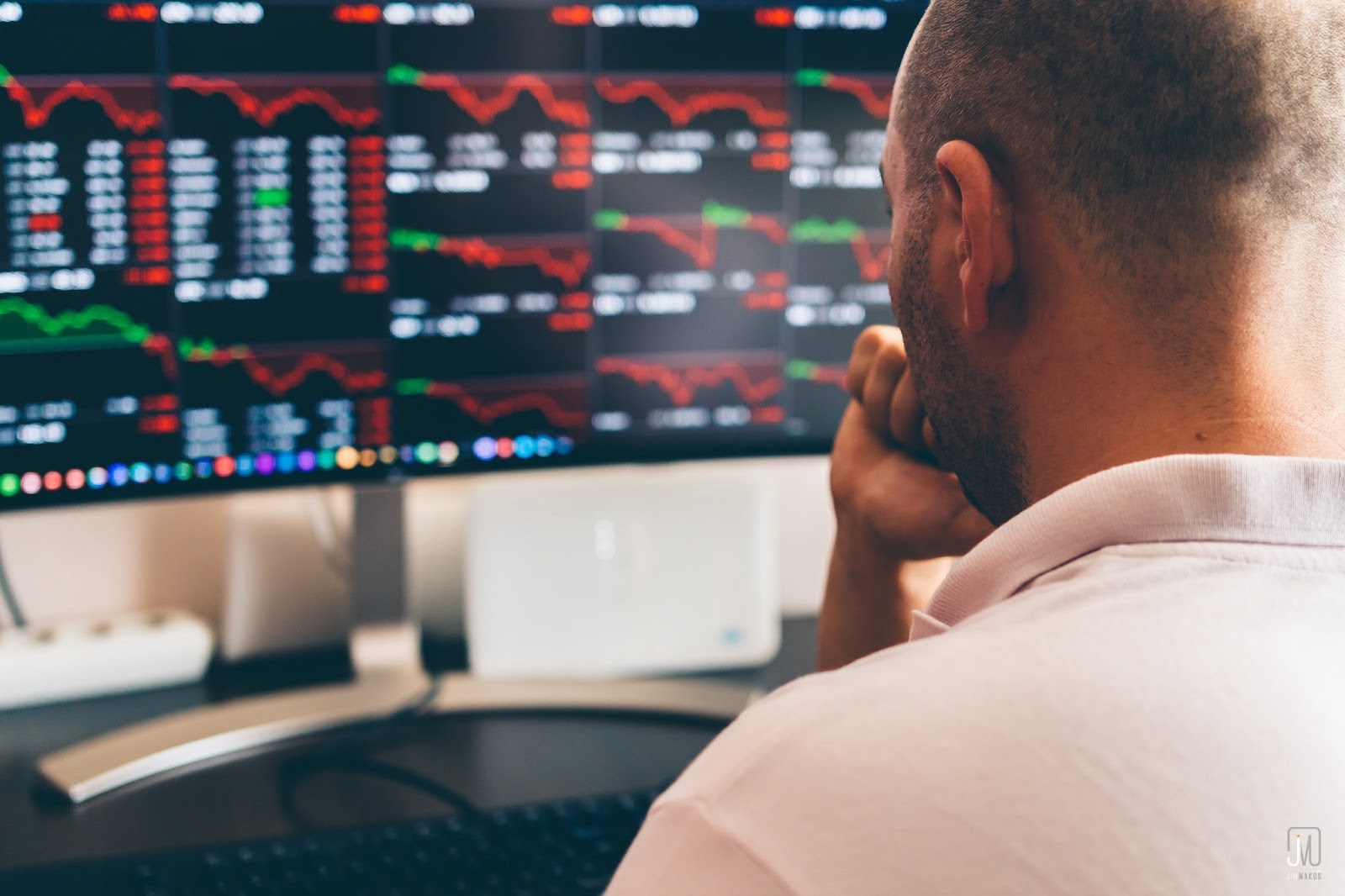
Daytrading: Trading cryptocurrencies, stocks or forex using strategies that give profit within the shortest possible time, usually within. Day traders are the most active traders, as they monitor their trade for little price movement that will give them profit.
Long-position: This means to buy at a lower price, and sell at a higher price. Traders who take long positions will benefit more from a bullish market.
Short position: This happens when the trader expects the price to go down. A trader takes a short position when they sell an asset that they do not own, with the hope of buying later when the price is low.
Leverage trading: This kind of trading allows a trader to open a position with more capital than they possess. It is trading on borrowed money, only that, in this case, it is done with a ratio to the equity capital by the owner. E.g. if I have 1000usd, and I want to enter a trade of 10000usd, I can request for a 10x margin. In this case, for any movement in price in my direction, I get 10times profit, and I am also exposed to ten times loss if it goes in the opposite direction. Margin trading should only be used by experienced traders, because of the potential of losing all your capital, if the trade goes against your prediction.
Support: In financial markets trading, support refers to the lowest price that the stock/coin reaches per time before it increases. The support level is the time where buyers rush in to buy more quantities because it is the lowest at the time. The increase in demand pushes the price up after that time.
Resistance: This is the opposite of support. The resistance level is the highest price that the product reaches before sellers flood the market. As sellers flood the market with their product, the price reduces afterwards.
Types of coins/cryptocurrencies
There are over 1000 cryptocurrencies today which can be classified under these three broad groups below.
1)Bitcoins
2)Altcoins
3)Tokens
Bitcoin: This is the first and most prominent cryptocurrency, with a fixed supply of 21 million bitcoins. Since its inception, bitcoin has had more than five forks. These forks have created different variants of bitcoin such as bitcoin cash, bitcoin gold etc.
Altcoins: These are other coins apart from bitcoin. These are other types of cryptocurrencies apart from bitcoin, that have their blockchains, with peculiar protocols. After the entrance of bitcoins, there have been more than 100 altcoins that have entered the cryptocurrency space. The most popular altcoins are litecoin, ethereum, ripple, neo, Tron, ethereum classic, bitcoin cash.
Tokens: These are generated through the functional structure of decentralised applications. Tokens refer to coins that are built on a third-party blockchain. They are usually created to facilitate smooth transaction flow within the ecosystem of the decentralised applications.
Investment Goals
There are three types of investment goals. These goals influence the kind of strategy that we use to trade cryptocurrencies. They are
1)Short term goal: These are goals that the trader or investor sets for themselves to achieve within the shortest possible time. In cryptocurrency trading, traders who have short term goals of making profit will apply day trading strategies to achieve their goal. The strategy for achieving a short time goal is quite different from the medium/long term goal.
2)Medium/Long-term goal: The industry is still quite young, and some people are hoping to cash out from their investment in specific cryptocurrencies within 2 to 5 years. Investors who have medium-term goals to achieve usually consider the fundamentals of the project they are investing in. They are not so concerned with the daily trade statistics of the coin or asset. Instead, they focus on the performance of the project in achieving a developmental milestone that brings value to its consumers.
In some cases, some medium-term investment may be classified as long term, depending on the sector in question. Long term investors usually buy investments when they are at their infancy stage, and focus on the fundamentals as well. They stay with the investment project, following the development road-map, and they are not too concerned with the charts.
Fundamentals of Cryptocurrency Trading
We are still laying the foundation that is necessary to be a successful trader, and this time, we would look at some critical factors to consider that will impact your ability to be successful as a trader.
1)Trading psychology:
The mindset of a trader is critical, as this will influence the way they respond to the market. When it comes to making money through any method, there are two significant things that prompt people to make irrational decisions . These are the emotions of fear and greed.
So how does fear impact our ability to make the right trading decisions? This can happen in two ways, fear of missing out of an excellent opportunity of making money(FOMO), or the fear of losing money. Trading decisions inspired by fear will not bring consistent results of success, as our emotions are clouded when we try to reason under that kind of condition.
In like manner, greed is another emotion that can affect right trading decisions. Greed is an emotion everybody has, and which is not a bad thing in itself, as long as it is not in control of your decision-making ability.
Some traders don't know when it's time to take a profit and exit the trade. We understand that every trader would like to maximise profit from every trade, but it is also essential to know that you cannot sweep all the profits every time.

As a trader, you learn to be content with whatever profit you make, instead of beating yourself about how much more you could have made. It is ok to look at areas where your strategy can be improved, but it has to be a conscious decision, that is well planned after some study and research.
2)Time management:
Even though the crypto market is open 24hours of the day, not every time will be good for trading, based on individual personality type and schedule. A trader should adopt a schedule that will help them achieve their trading goals, while taking into account how they respond to market events.

Credits: liteforex
In managing your trading routine as a trader, you can determine the maximum number of trades you place in a day. If you decide that you will not place more than five trades in a day, then try to stay within that limit.There are days when the market will have cyclical movement, and the urge may be there to trade as often as you can in those circles. Try not to do it(except its part of your trading strategy), because if you do, it could be a habit, which could cause you severe losses, if the market takes an unexpected turn, which is not a rare occurrence.
A trader should not approach trading with the mindset of a gambler, as that would influence the kind of trading decisions.
3)Risk management: Every business venture has some element of risk involved. Even when we make the most detailed research possible, we will still not be able to get all the answers. Therefore, while we may not be able to avoid risk totally, we can minimise and manage the outcomes of a risky venture.

Credits: longnguyen.site
So how does it apply to crypto trade? Remember that the trader aims to maximise profit and minimise losses. So, therefore, the trader has to assess how much risk appetite they have, i.e. the amount of risk they can accommodate, without jeopardising the capital. Even though we anticipate profits from every trade, it is essential to note that the trade may not go our way. For these reasons, traders use tools like stop loss, for long positions, to limit the loss exposure if the market goes in the opposite direction.
4)Money management: This is another topic that is closely associated with risk management. However, money management focuses on the percentage of capital that is used to enter each trade. This is a fundamental concept that should be understood by all day traders in order to preserve capital.

Credits: technische-analyse-trading.de
So how should I manage my capital? The first rule is that Never use all your money in one trade, no matter how appealing the prospect is. While some have advocated for 1% or 2% of trading capital for each trade, this recommendation may not work with traders with little capital.
Therefore, the money apportioned for each trade would vary from one trader to another, based on their risk appetite. Individuals should ensure that the portion of capital deployed in a trade should not be so much that if it does not go as planned, trading activities will be disrupted.
Conclusion
We have laid the foundation for trading cryptocurrency profitably in the chapter, by looking at the basics of the crypto market and explaining some key terms. We have also looked at some non-technical skills that will help us position our mind properly before we trade. Our next chapter will focus on short term trading strategies.